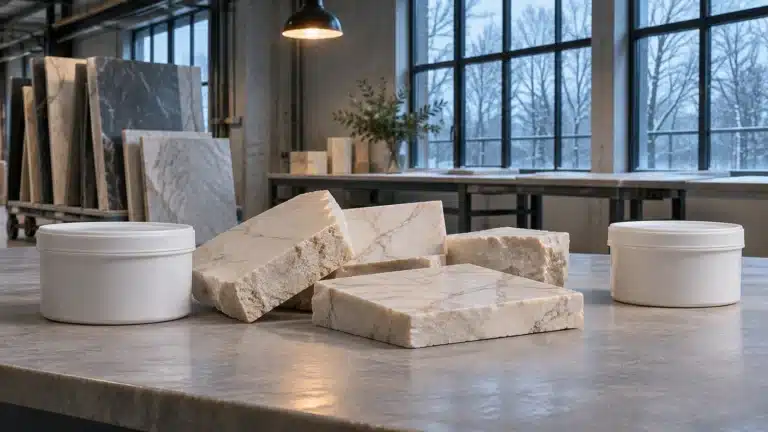

Epoxy squeeze-out shows that adhesive reached the edge you can see. It cannot show how much of the hidden joint made contact, how thick the bond line is, or when the work can carry load. Read the bead against the approved adhesive footprint, the seated position and the time between mixing and assembly.
Check the joint before interpreting the bead
| What you see | What to check next |
|---|---|
| A bead where the approved sample showed one | Confirm the parts seated as intended and the specified gap was maintained. |
| One heavy end and one light end | Check alignment, dry fit and the placement of adhesive before assembly. |
| No bead at an edge | Check whether the adhesive was meant to reach that edge. A specified setback can leave a clean edge. If the bead was expected, review placement, seating and timing. |
| Unexpected overflow on a visible face | Record its location before cleanup. Follow the approved method without shifting the parts. |
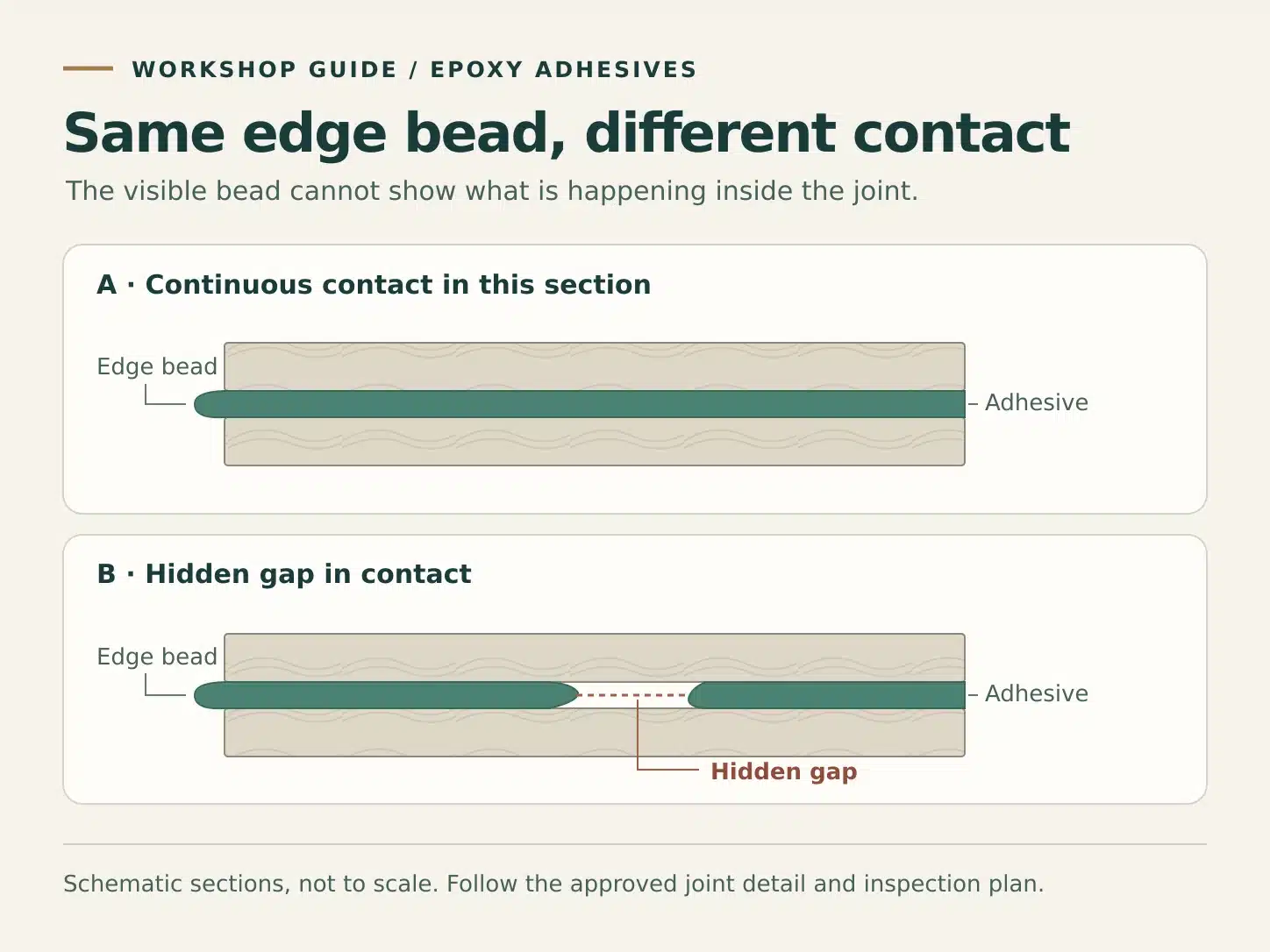
Photograph the joint ID and orientation as well as the bead. Record the grade, lot, preparation, intended adhesive footprint, approved gap and times of mixing, spreading and seating. Review those times against the instructions for the supplied grade and site conditions. Do not add pressure merely to create a bead: it can change the gap or move adhesive away from the intended contact area.
Inspect hidden contact on a separate sample
Where the inspection plan calls for a closer look, make a separate coupon using the intended stone backing, mating surface, preparation, layout, gap and assembly timing. Agree whether the check will examine transfer at a defined stage or a cured section. Photograph both faces or the section and keep the orientation visible. A coupon built with a different geometry may answer a preparation question without representing the whole joint.
Opening a coupon changes it. Use a separate specimen for any test that requires an undisturbed joint. Do not pry apart installed work or inject paste to hide an unresolved gap. If seating, contact or cure is in doubt, hold the affected work for the responsible team and keep specified supports and fixings in place. Follow the project’s release criteria; a hard edge bead cannot clear a joint for loading.
For the wider sequence, see surface preparation, mixing and curing for stone epoxy. Send KEDA the joint detail, photos and mix-to-seat record to discuss the behavior of the supplied adhesive.