Kitchen and Bathroom Joint Sealing
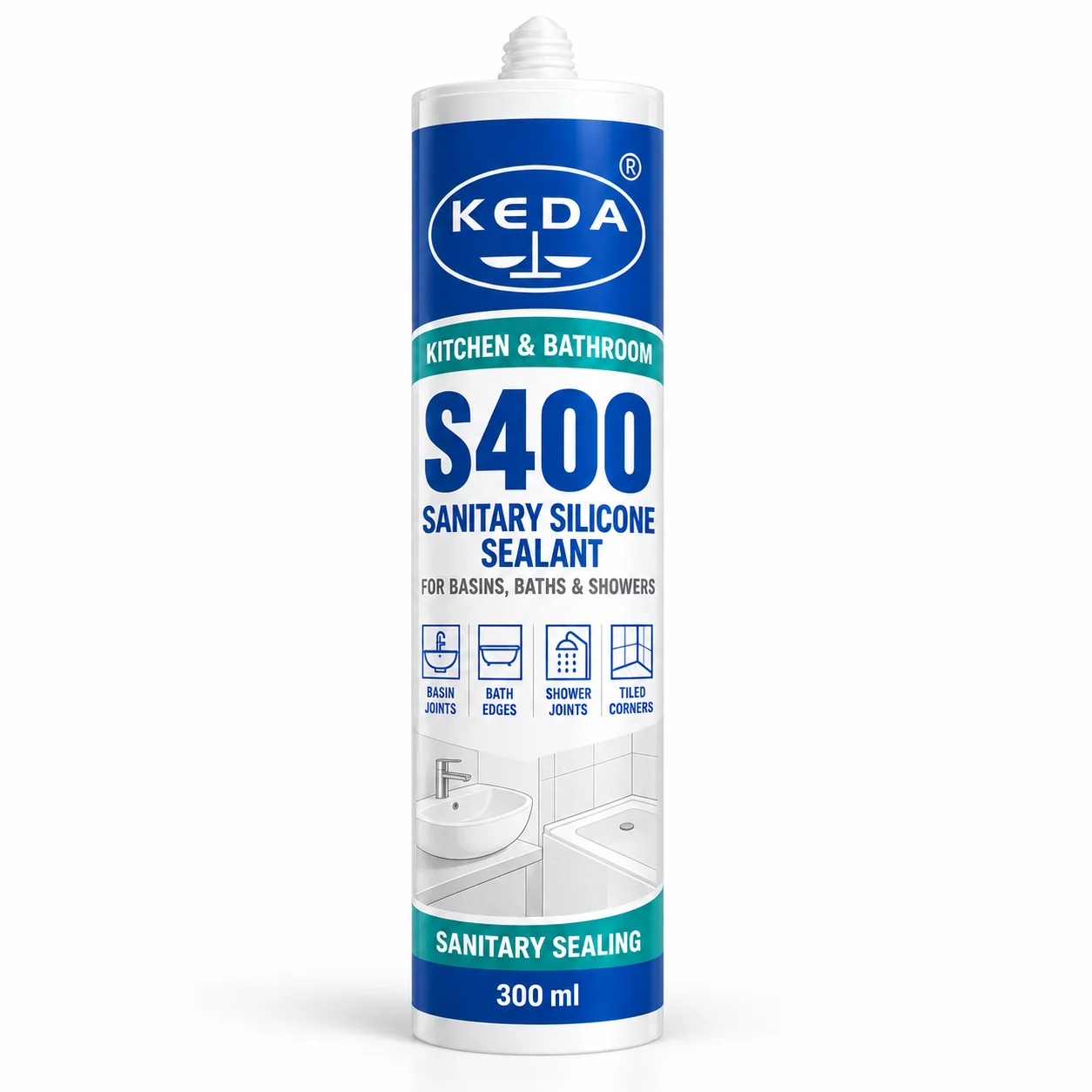
KEDA S400 is intended for finishing and maintenance joints around kitchen and bathroom fixtures. Its focus is local, non-structural joint sealing in areas subject to splashes and routine cleaning.
Select the sealant according to the actual fixture material, surface finish and joint design. A sanitary application does not automatically establish compatibility with every bath, basin, countertop or shower enclosure.
Distributor enquiries & qualifying bulk orders
| Application focus | Kitchen and bathroom connection joints |
|---|---|
| Selection details | Fixture material · splash exposure · joint design |
| Order requirements | Confirm supplied grade, colour, packaging and quantity |
Request the current product instructions and confirmed supply specifications for your application.
Confirm adhesion and compatibility on the actual surfaces before installation. Identify any glazed ceramic, glass, coated metal, acrylic or other plastic components in your enquiry. Natural stone and sensitive finishes require a separate suitability assessment.
Keep the room ventilated and remove standing water and soap residue from the joint. Use a cleaner compatible with both the sealant and surrounding surfaces, following its instructions.
Inspect joints periodically for lifting edges, cracks or persistent mould. If a seal has detached or deteriorated, identify the cause and replace it rather than covering it with a thin layer of fresh sealant. No maintenance-free or permanently mould-free performance is claimed for S400 on this page.
Review the materials and application before choosing the supplied grade.
The following is a general workflow. Follow the application and safety instructions supplied with the actual product.
Provide ventilation and use the protective equipment specified in the supplied safety information.
Follow the water-exposure and curing instructions for the supplied product. Do not assume a fixed waiting period from another brand's sealant, and do not treat a dry surface as evidence of full cure.
Do not assume suitability. Identify the exact stone or engineered surface and request a compatibility and staining assessment before selecting a sealant for that joint.
No. "Sanitary" identifies the intended application category. Food-contact suitability, antibacterial activity and mould-resistance ratings are separate claims that require specific evidence. None of these certifications or ratings is claimed for S400 on this page.
For a reliable repair, remove failed material and prepare the joint correctly. Simply covering an old bead does not address contamination, poor adhesion, fixture movement or a hidden leak.
Send the fixture and surface materials, joint location and dimensions, preferred colour and packaging, estimated quantity and destination market. Contact KEDA to discuss product selection and quotation requirements.
KEDA S400 Sanitary Silicone Sealant