
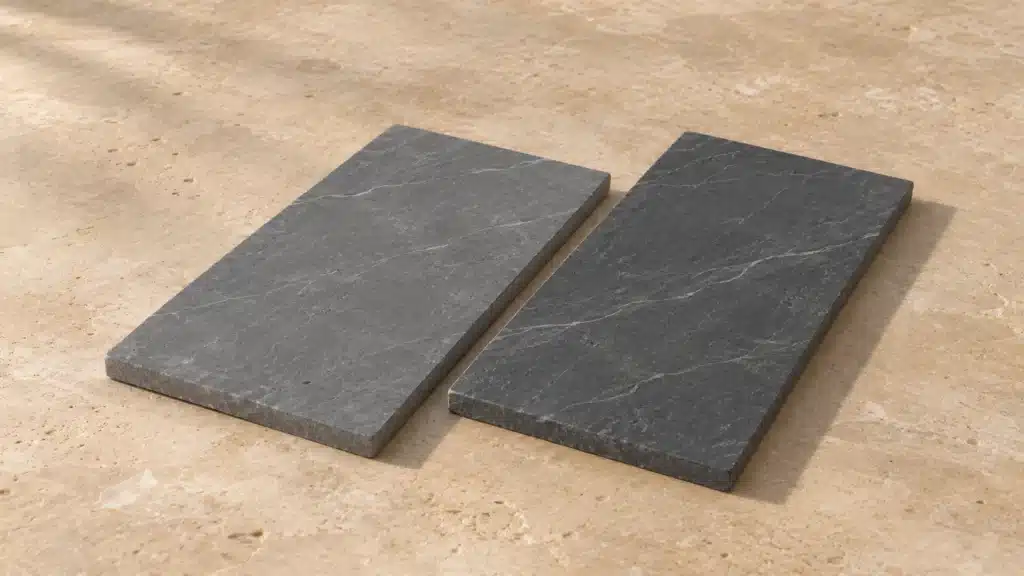
If you want protection while keeping the stone close to its existing dry tone, start with a trial of KEDA SC100 Penetrating Stone Sealer. If you want deeper tones or stronger vein contrast, trial KEDA SC200 Stone Color Enhancer. Both are intended for compatible absorbent stone. When a job needs both a richer tone and a defined level of protection, approve the appearance and verify the protection separately.
If the issue is gloss, scratches, or a dull mark, start with the stone treatment selection guide.
Prepare the sample set
Use dry offcuts from the job lot with the same face finish. Include a finished edge or return if it will be visible on the installation. Choose pieces with comparable background tone and veining, and note any differences before treatment. For installed stone with a previous sealer, wax, or factory treatment, a fresh offcut may not represent the surface. Confirm compatibility and arrange an inconspicuous trial on a representative area when needed.
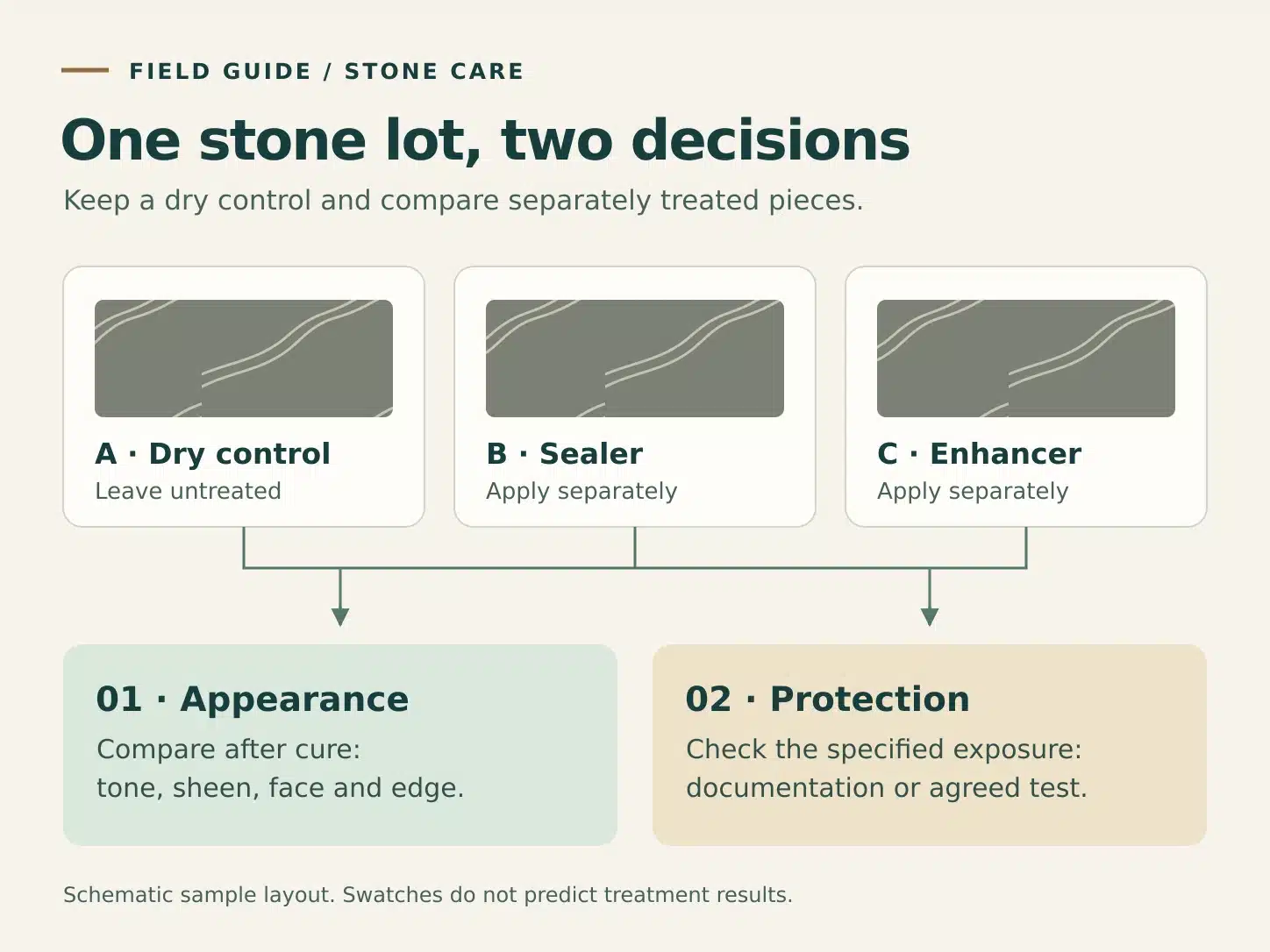
Keep one piece untreated. If only one treatment is in contention, a dry control and that candidate are enough. For a direct comparison, apply SC100 and SC200 to separate pieces. Follow the supplied instructions for preparation, application, excess removal and cure. Combining the two products is a separate system question; only trial a combined sequence if the supplier confirms it for the actual materials.
Approve the look on cured, dry stone
Place the samples side by side in the intended lighting at the same orientation. In diffuse light, compare background tone and vein contrast. In side light, check sheen, streaks and how the finish carries around an exposed return. A sample darkened by water can help communicate a preference, but use the cured, dry sample for approval.
| Piece | What to judge | What to keep |
|---|---|---|
| A · Dry untreated control | Original tone, veining and sheen | Stone lot, finish and photo before treatment |
| B · SC100 trial | Any change from A, especially on light areas and visible edges | Accepted appearance and any protection evidence needed for the job |
| C · SC200 trial | Depth, uniformity and contrast; compare face and edge | The accepted color sample and any separate protection evidence required |
A patchy or unexpectedly shiny result is a reason to review the preparation, prior treatment and excess-removal method before repeating the trial. If the result is too dark, compare a different candidate on fresh stone. Keep the signed-off physical sample as the reference for larger areas.
Verify protection for the actual exposure
List the exposures the surface will face, such as waterborne spills, oil, or repeated contact with a specified cleaner. Ask for supporting information for the exact product and use. If the project calls for a spill trial, agree on the substance, contact period, cleanup method and pass criteria before testing a separate cured sample. Water beading on an appearance sample does not establish oil resistance or cleaner compatibility.
For marble and other acid-sensitive stones, a product selected to reduce staining should not be relied on to prevent acid etching. The Natural Stone Institute’s care guidance explains why stone care still includes appropriate cleanup and maintenance.
Send KEDA your sample brief: stone and finish, previous treatment, the accepted sample ID or target tone, and expected exposure. Keep the product and lot, the applied method and the appearance decision together with the protection evidence.


