
Marble Edge Chip Repair: Fill or Reattach the Fragment?

Dry-fit the original fragment and check the top and front edges before mixing adhesive. Use the fit and the condition of the stone to choose a repair.
Marble Adhesive Color Paste: Dosing and Mixing

Turn marble adhesive color adjustment into a repeatable recipe. Select the base, measure each paste shade, confirm the percentage basis and mixing sequence, then retain an accepted cured sample.
Travertine Hole Filler: Selection and Sample Checks
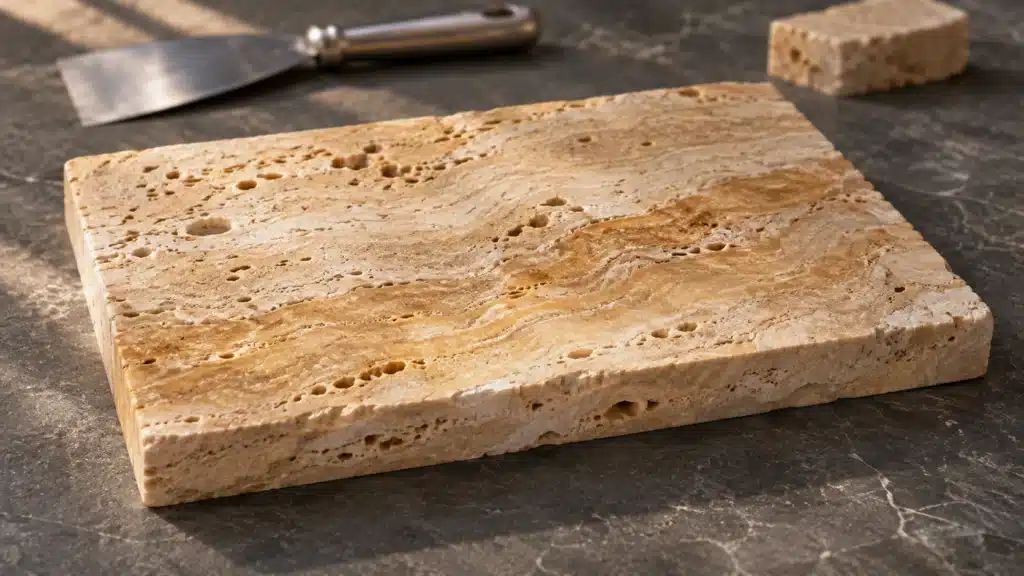
Distinguish open pores, suspected missing fill, concealed voids and joints before choosing a travertine repair material. Use representative samples to assess preparation, cured color and the final finish.
Can Marble Adhesive Bond to Polished Stone? Surface Checks

A polished stone piece can contain very different bonding surfaces. Identify both contact faces, preserve the visible finish and validate a reproducible preparation process.
Marble Adhesive Shelf Life: Managing Unopened and Part-Used Stock
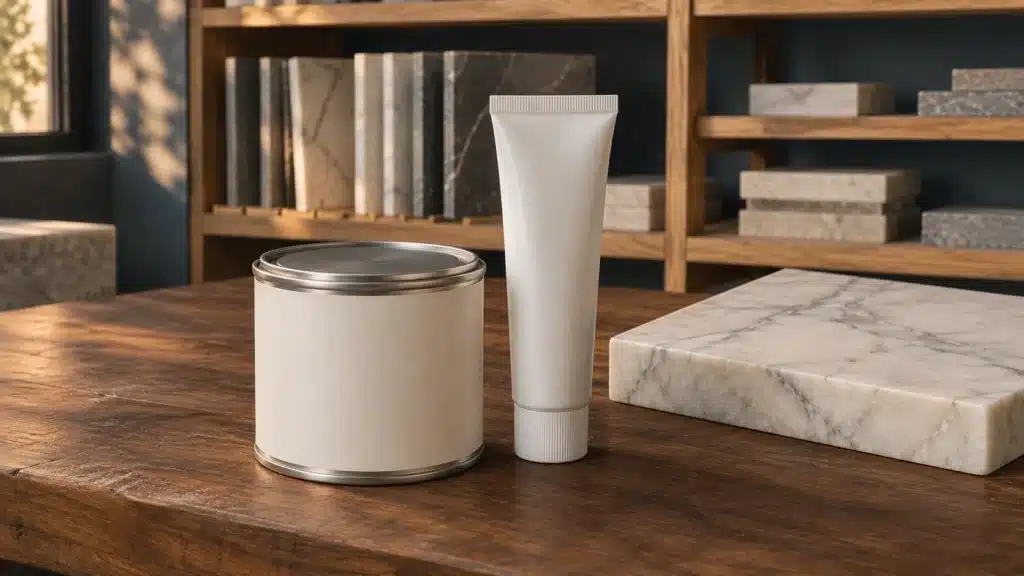
Manage marble adhesive shelf life by checking product dates, matched hardener, opened-stock records and storage history, then rotate eligible stock by expiry.
Marble Adhesive Setting Too Fast: How to Restore Working Time
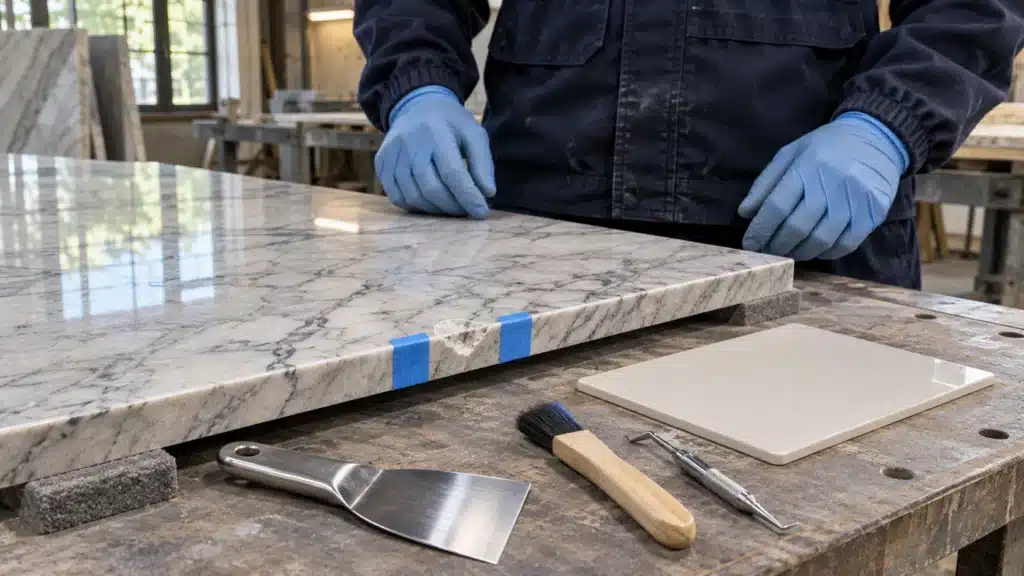
Marble adhesive setting too fast? Check hardener dose, material temperature and batch planning, then organize the job for consistent placement and curing.
Marble Adhesive Separation, Skin and Lumps: What to Check Before Use

Check separated, skinned or lumpy marble adhesive before use. Learn what to photograph, when to hold a container and what details to send for supplier review.
Sintered Stone Miter Joints: Adhesive Selection and Sample Checks

Select by the actual slab and edge detail. Use practical tables to separate fabrication from installation, prepare a useful application brief and record dry-fit, cure, appearance and processing checks.
How to Approve Cured Marble Adhesive Color for Bulk Orders

Turn an accepted adhesive shade into a traceable purchasing reference. Define the specimen, stone, preparation, viewing conditions and repeat-order comparison before approving a bulk order.
How to Prevent Cross-Contamination in Two-Part Stone Adhesives
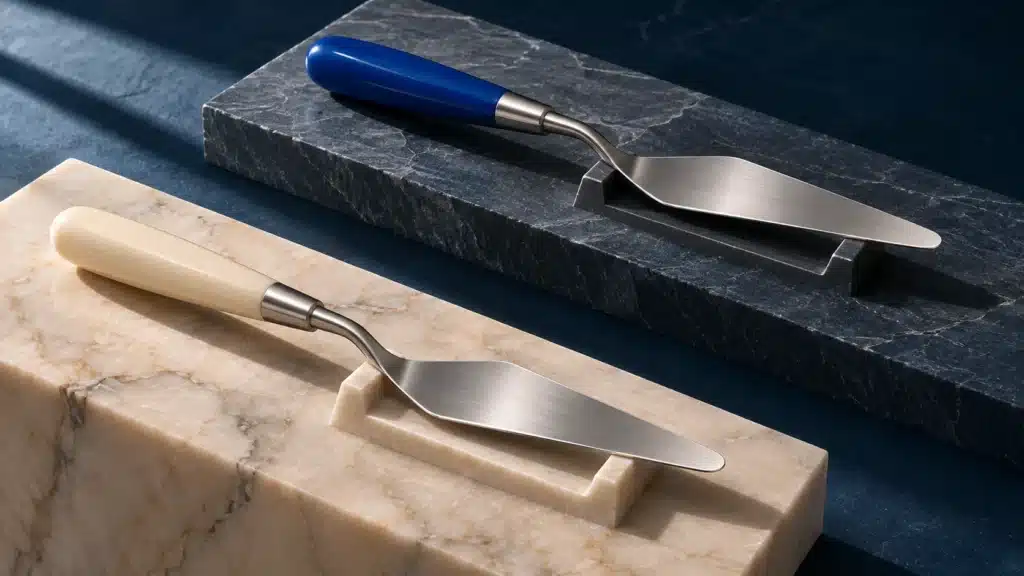
Keep original components separate through dedicated dispensing tools, paired lids and a distinct mixing area. Use practical tables for station setup, incident records and shift handover.