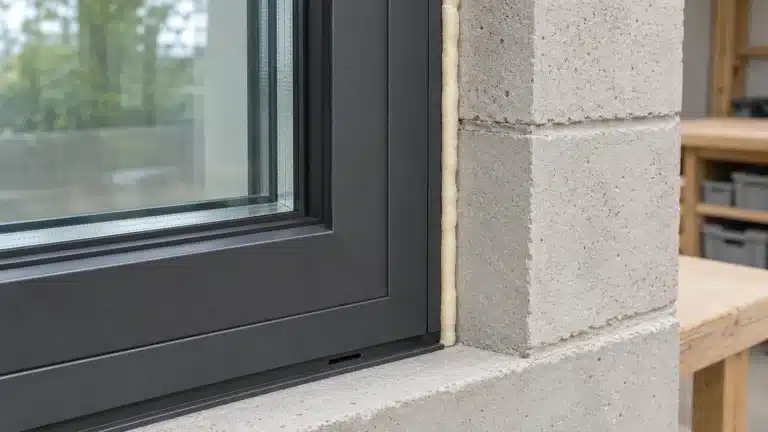

Two cans have the same nominal size, yet one installation consumes more foam than another. Before blaming the can or multiplying a headline yield by the order quantity, check what the figure measures and what the actual gaps require.
Can size, free-foamed volume, joint yield and usable site output are different quantities. A useful estimate connects the actual product and test basis to measured gap geometry, the application method and an acceptable cured result.
For installers, that means a more repeatable material allowance. For distributors, it means a clearer answer when a customer asks how many windows one can will complete.
1. Identify Which Yield Figure You Are Reading
Read the description beside the number, including its unit and test method. A large liter figure and a length in meters should not be compared as if they describe the same output.
| Figure | What to establish | What it does not establish by itself |
|---|---|---|
| Nominal can size | The stated package or contents designation | Liters of cured foam in an installed gap |
| Free-foamed or box yield | Foam volume measured under the stated procedure | Identical output in every constrained joint |
| Joint yield | Output for a defined joint cross-section and method | The same running length in a wider or deeper gap |
| Usable site output | Accepted filling completed with the recorded application setup | A universal allowance for other installations |
FEICA’s published material distinguishes joint yield from free-foamed yield. Its current standards page also identifies EN 17333-1 as covering foam-yield characteristics. Ask which measurement a supplier’s claim uses before comparing products.
Soudal’s Soudafoam 1K technical sheet, for example, lists joint yield and box yield separately. The example illustrates the reporting distinction; its quantities are not KEDA specifications.
KEDA’s PU foam range includes frame-gap and general filling enquiries. Confirm the actual grade, can configuration and supporting yield information for the product being considered.
A manufacturer's foam data sheet can be checked for how it separates box yield from joint yield. Record the width and depth of your own gaps before converting a published claim into a can count.
2. Compare the Method and Conditions Alongside the Number
Request the yield unit, test method, can size and relevant test conditions together. For a length-based result, obtain the joint dimensions used to produce it.
Bostik’s FEICA-method factsheet explains that joint-yield reporting relates to a defined cross-section. This is why “meters per can” needs the width and depth beside it. A length without those dimensions is incomplete estimating information.
Check the dispensing format as well. Record gun or manual-straw application and the actual compatible setup. A comparison that changes the applicator, gap geometry and operating conditions at the same time cannot isolate the reason for a different output.
Treat laboratory yield as a documented product result under its stated conditions. Treat the site’s material allowance as a separate planning result that includes the work actually completed and losses within its defined scope.
Where the test basis is missing, request it instead of inventing a conversion from can weight or nominal volume. A larger-looking bead is also not a substitute for a defined measurement.
Keep the comparison focused on suitable products. Higher reported output does not, on its own, establish compatibility with a pressure-sensitive frame or the required installation performance.
3. Measure the Space the Installation Actually Requires
Survey the specified foam-filled region of the joint. Record length, width and depth in consistent units, allowing for changes along the opening and areas assigned to other installation components.
For a simple rectangular space:
Geometric volume in liters = length in meters × width in millimeters × depth in millimeters ÷ 1,000.
The following dimensions are hypothetical arithmetic examples, not recommended window gaps, foam-layer sizes or application limits.
| Gap group | Length per gap | Width | Depth | Number | Total geometric volume |
|---|---|---|---|---|---|
| Example A | 3.0 m | 20 mm | 30 mm | 10 | 18.0 L |
| Example B | 1.5 m | 30 mm | 40 mm | 4 | 7.2 L |
| Combined examples | — | — | — | 14 | 25.2 L |
For Example A, one space is 3 × 20 × 30 ÷ 1,000 = 1.8 L. Ten such spaces total 18 L. Example B has a different cross-section and length but also totals 1.8 L per space.
This calculation describes space, not the volume of liquid product to dispense or a universal initial-fill fraction. Foam expansion, application limits and the actual filling method come from the supplied product instructions.
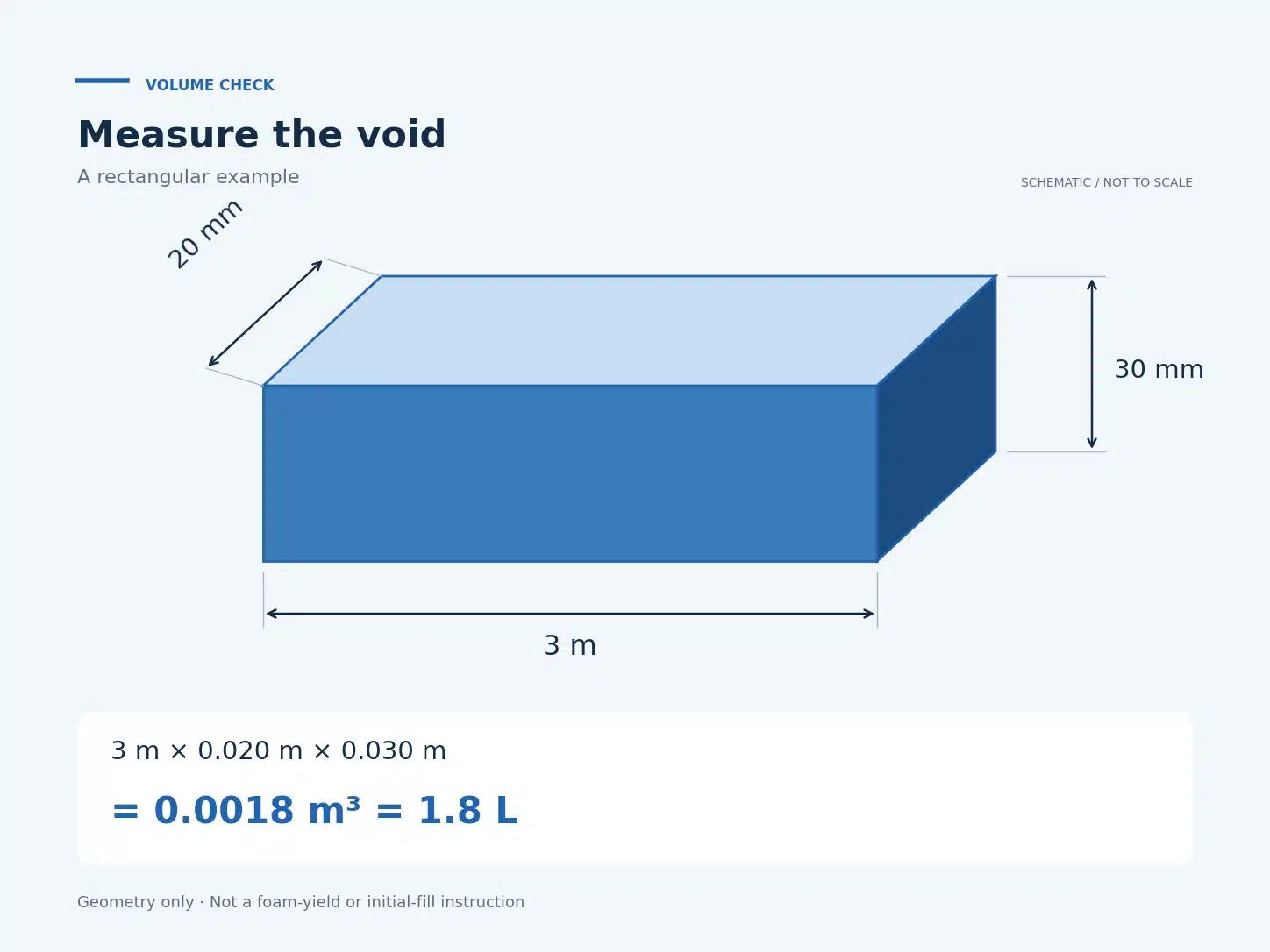
Hypothetical geometry, not an installation detail, initial-fill instruction or can-yield result.
For irregular gaps, divide the survey into representative sections and record the method used. Do not hide a large variation in depth behind one convenient width measurement.
4. Record Material and Site Conditions
Record known can, substrate and ambient conditions during a representative application. Include humidity or moisture information relevant to the actual product’s instructions.
A can stored in a different location from the work area may start at a different temperature. The frame and surrounding wall may also differ from the room’s air conditions. Note these distinctions rather than relying only on a weather report.
Follow the supplied instructions for storage, conditioning, can preparation, orientation and substrate preparation. Where moistening is required, use the specified method. Additional water is not a general way to increase yield.
Keep pressurized cans within their permitted handling conditions. Do not use improvised heating, puncturing or pressure changes to recover output. Use the actual label and SDS for ventilation, protective equipment and handling.
When comparing results, keep missing information visible. “Can temperature not recorded” is more useful than a precise value reconstructed afterward without evidence.
If output changes between locations, compare the conditions and setup before changing the product. A site record can reveal whether the difference tracks the materials, applicator, geometry or another change.
5. Match Output Control to the Gap
Check that the applicator suits the supplied valve and product. Record its condition and the application sequence, including restarts, pauses and access difficulties.
KEDA’s current range information identifies 750 ml gun and manual-straw configurations for KD600 enquiries. That package information does not establish a foam-yield figure or equal results from every applicator.
Select the actual configuration before the trial. Confirm the compatible equipment and the instructions for interruptions, reuse and cleanup rather than assuming that a partly used can remains usable under every storage arrangement.
Observe where material goes. Excess outside the required region, foam subsequently trimmed away and material lost during starting or stopping affect practical consumption. Record these losses within the trial’s defined scope.
Use the specified filling sequence and expansion allowance. An aggressive output setting or filling the whole opening in one pass is not a universal shortcut for wider or deeper gaps.
Keep application quality in the comparison. Reducing consumption by leaving an incomplete required section is not a successful yield improvement.
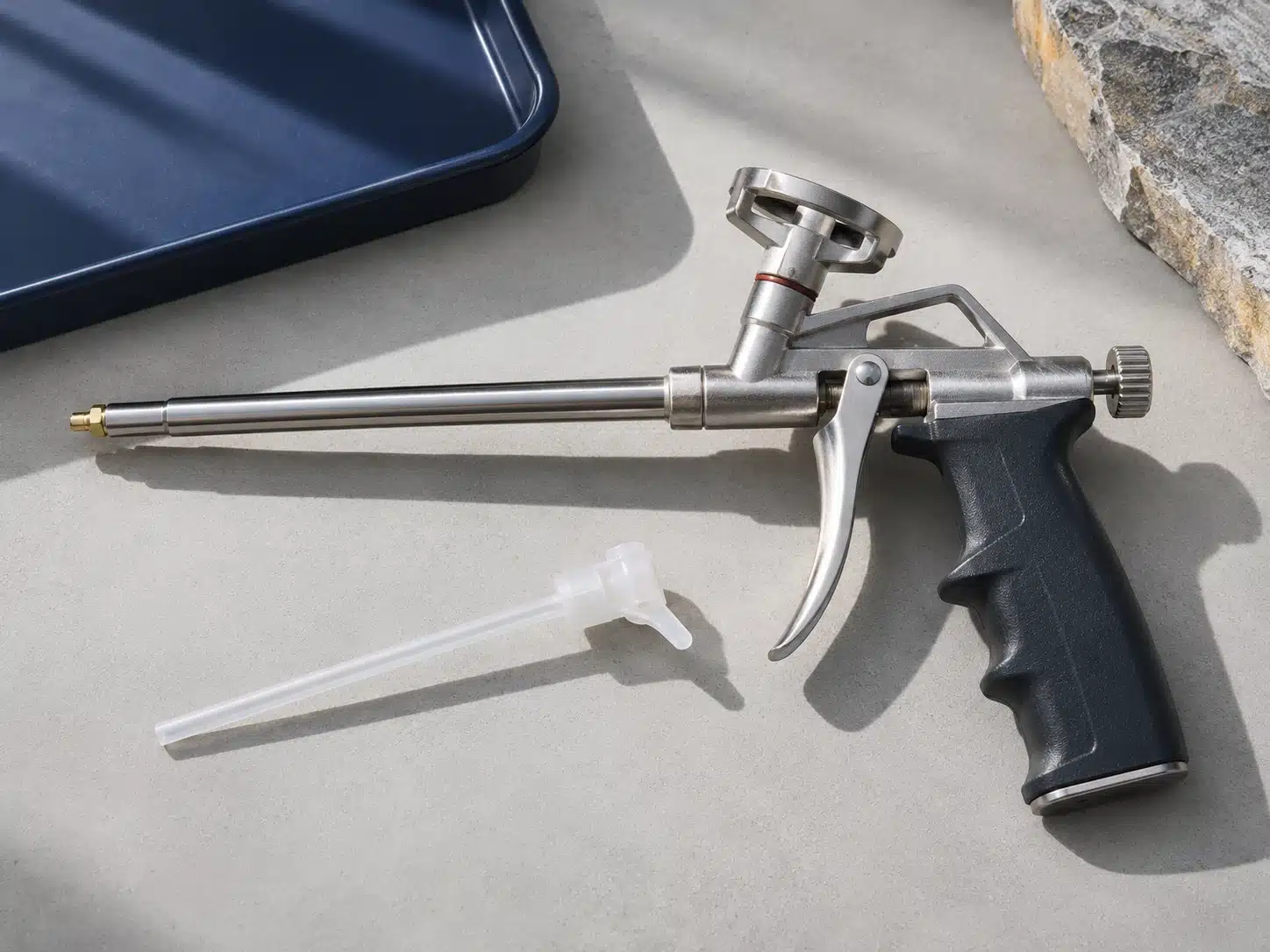
Applicator references, not approval of a valve pairing or operating setup.
6. Assess the Cured Filling, Not Just the Expanded Face
A prominent bead at the opening does not show the entire filled section. Evaluate the installation at the required stage using the agreed method for the actual detail.
Use a representative removable mockup where section review is needed. Record the filled region, relevant contact, visible voids and any required correction. Do not cut into installed frames or concealed seals as an informal yield test.
Follow the product’s curing and trimming instructions. Surface skinning, permitted cutting and readiness for later finishing are separate questions; a yield comparison should identify when its observations were made.
If some work needs refilling or replacement, include the additional material in the practical record. Keep rejected work visible instead of reporting only the most favorable portion of the trial.
Assess frame alignment, required clearances and the rest of the installation as specified. Foam quantity alone does not establish curing pressure, dimensional stability, thermal performance or an acceptable complete joint.
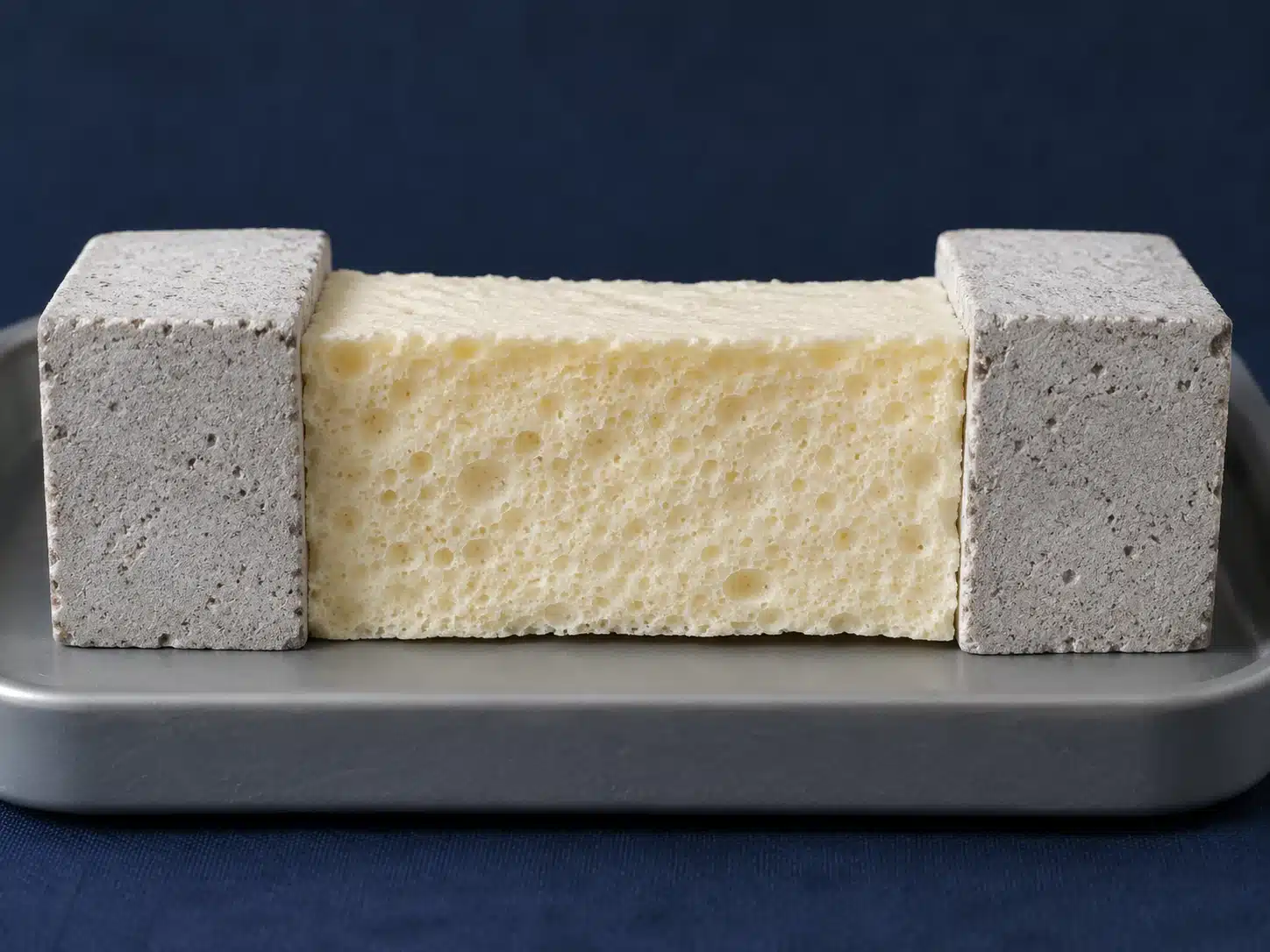
Fictional section sample; cell appearance is not a density, insulation or acceptance result.
7. Build a Representative Site-Yield Record
Define the comparison before opening the cans. Keep the grade, format, gap group, operator method and acceptance requirements identifiable.
| Record group | Information to retain |
|---|---|
| Product | Grade, batch, nominal can size and dispensing format |
| Gap survey | Length, width, depth, variation and region assigned to foam |
| Conditions | Known can, substrate and air conditions; relevant moisture observations |
| Application | Compatible tool, preparation, sequence, interruptions and output control |
| Consumption | Cans used and the treatment of part-used stock and losses |
| Cured result | Assessment stage, accepted filling, correction and rejected work |
| Planning output | Comparable accepted length or volume per can, with scope and limits |
Use a reference such as FY-01 to connect the gap measurements, photographs and material record. Keep raw observations so another person can reconstruct the allowance.
Define how part-used cans are counted. If the comparison requires a partial-can allocation, use an agreed measurement method; do not estimate remaining contents from appearance alone.
A simple run of complete cans can make the boundary easier to explain, but its output still needs assessment. Record retained usable stock separately where the product and equipment instructions permit it.
Repeat enough representative work to understand relevant variation under the agreed plan. This article sets no universal sample count, efficiency percentage or passing yield.
8. Convert the Record Into a Purchasing Allowance
Use comparable quantities. If the verified practical result is accepted meters per can for one gap group, apply it to that group’s matching cross-section and conditions.
Do not apply the same length allowance unchanged to a wider or deeper group. Nor should a conversion based only on cross-sectional area be treated as proof that application and curing behavior will remain the same.
Where a representative practical result is expressed as accepted filled volume per can, divide the comparable required volume by that result and round up to whole cans. Keep planned reserve stock separate from the calculated consumption.
If the practical result already includes the recorded trimming, restarts and correction, avoid adding those same losses a second time as a general waste factor.
Keep the source of each number clear: surveyed geometry, measured practical output, supplier test data or a planning assumption. Update the allowance when the product, applicator, gap or conditions change.
For a project with several opening types, keep separate lines for each surveyed gap group. Record the number of openings and the foam-filled perimeter actually required, including any regions excluded by the installation detail. Allocate the trial result to the matching group first, then total the order allowance. This makes a later change in opening size or joint depth easy to update without rebuilding the entire estimate.
For KEDA distributors and partners, this produces a useful customer answer: an allowance tied to a documented application, rather than an unsupported number of windows per can.
9. Choose Foam Within the Complete Installation
KEDA Window & Door PU Foam addresses frame-to-wall gaps. KEDA KD500 Multi-Purpose PU Foam addresses general nonstructural filling enquiries. These roles do not, by themselves, establish comparative yield or formulation.
Use KEDA’s window and door installation guidance to keep mechanical fixing, gap filling, protection and perimeter sealing within the complete detail. Preserve required drainage and operating clearances.
Before ordering, compare gun and straw formats for your work pattern.
When discussing PU foam requirements with KEDA, send the gap survey, frame and substrate materials, site conditions, applicator preference and destination market. Request the actual grade’s yield basis, application limits and supply configuration together.
A sound order allowance begins with suitable foam and measurable work. The best comparison connects the can’s documented result to the accepted filling the customer actually needs.
Frequently Asked Questions
1. Does a 750 ml can produce 0.75 L of cured foam?
No. Nominal can size and expanded cured-foam output are different quantities. Obtain the product’s stated yield method and conditions.
2. Will the highest box-yield figure always mean fewer cans on site?
No. Compare suitable products using the same basis, then check practical output in the actual joint configuration.
3. Can the calculated gap volume be used as the initial dispensing amount?
No. It is a geometric estimate of space. Follow the supplied foam’s expansion allowance, filling sequence and application limits.
4. Should gun and straw formats be treated as the same yield trial?
Identify the actual format and compatible applicator separately. Do not assume one configuration’s result proves another’s output.
5. Can I estimate windows per can without measuring the gaps?
A window count alone omits perimeter length, width, depth and installation variation. Survey the required region and use a representative practical allowance.