
A marble surface can look darker and more even while it is wet, then reveal streaks, a dull patch or a remaining mark after drying. Judging a cleaner during wiping leaves part of the purchasing decision unfinished.
Start by confirming that the actual product permits the marble, finish and existing treatment involved. Then assess a small representative area using the complete proposed method, including the cleaning tool, removal, rinsing and drying stages.
The aim is specific: determine whether that method removes the intended soil without an unacceptable change to the identified surface. Keep the result traceable before extending it to a countertop, floor or bulk order.
1. Identify the Surface and the Existing Condition
Record what is being cleaned before choosing the trial location. The stone name alone does not describe its finish, treatments, repairs or adjoining materials.
| Item to identify | Information worth recording |
|---|---|
| Stone | Actual material and available supplier or installation identification |
| Finish | Polished, honed, textured or another confirmed finish |
| Previous treatment | Known sealer, wax, coating, enhancer or cleaning history |
| Surface condition | Existing dull areas, scratches, discoloration, repairs or residue |
| Soiling | Surface grease, general grime or a separately identified deposit |
| Adjacent materials | Grout, sealant, metal trim and other finishes within reach of the work |
Use the stone-care product range to separate cleaning from protection, appearance enhancement and repair. A product suitable for one task does not automatically address the others.
For previously sealed marble, record the actual treatment rather than assuming the stone is untreated. If KEDA SC100 Penetrating Stone Sealer was used, include that identity and the available application history in the cleaner enquiry. Its presence does not establish compatibility with every cleaning method.
Photograph the dry starting condition. Include an overview and a closer view under useful lighting so an existing dull patch is not later mistaken for a new result.
2. Confirm the Cleaner’s Scope Before Testing
KEDA SC300 Heavy-Duty Stone Cleaner & Degreaser is presented for surface oil films, grease and accumulated general soiling on compatible surfaces. Confirm the actual supplied product’s permitted materials and restrictions before testing it on marble, especially polished or treated stone.
Obtain the application instructions and SDS. Resolve the required concentration, contact period, tools, solution-removal method and rinsing procedure before beginning. A trial should evaluate an identified method, rather than discover a dilution by guesswork.
Confirm the supplied form as well as the product name. A concentrate and a ready-to-use version need different preparation records. If dilution is required, record measured quantities and the stated basis, then identify the prepared solution so another operator can reproduce it. Keep that record with the trial rather than relying on an unmarked spray bottle.
The Natural Stone Institute explains that calcareous stone is sensitive to acidic solutions. Choose a product intended for the actual marble and task; do not use an acidic household cleaner simply because the mark resembles a familiar bathroom deposit.
Likewise, a broad description such as “stone cleaner” or “acid-free” is not a complete compatibility statement. Check the permitted finish and existing treatment. If the surface is excluded or the instructions remain unresolved, obtain a suitable recommendation before applying the product.
The Natural Stone Institute's guidance on compatible stone cleaning explains why the stone's composition matters when selecting a cleaner. Check the cleaner's directions for the identified stone and finish before setting up the trial.
3. Choose a Representative, Low-Visibility Trial Area
A spare piece can help evaluate the stone and finish, provided its condition represents the intended work. An untreated offcut does not reproduce a countertop that has received a coating or years of maintenance products.
Where appropriate, agree a small inconspicuous area of the actual installation. Choose a location that represents the material, finish and soil being assessed while limiting the consequence of an unwanted change.
Keep a comparable nearby area uncleaned as an observation reference. Identify both locations in photographs or a simple sketch. Avoid placing an unverified adhesive label directly on a sensitive finish merely to mark the boundary.
If the installation contains different stone batches, finishes, repairs or treatments, decide which require separate assessment. A successful trial on one uniform area should not silently cover every other material.
LATICRETE’s care guidance recommends testing a small inconspicuous area and allowing it to dry when assessing cleaner compatibility. Use the actual product’s assessment conditions; do not borrow a universal waiting period from an unrelated treatment.

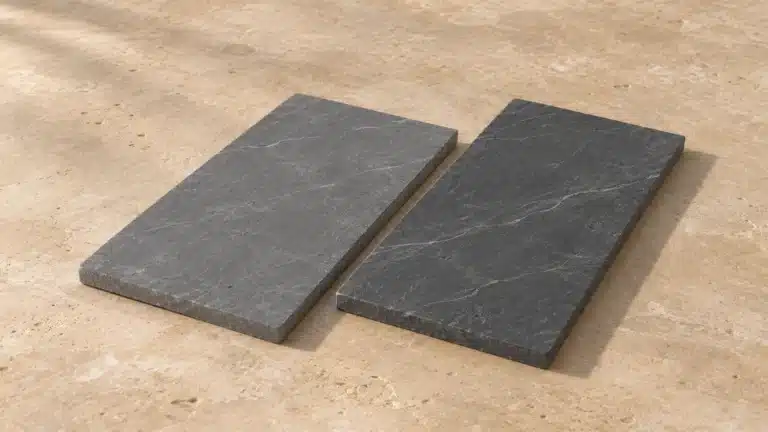
Editorial specimen-selection props. Matching appearance alone does not establish matching treatment or maintenance history.
4. Record the Whole Method, Including the Tool
A cleaner trial should include the equipment that will contact the surface. The liquid, pad or brush, working action and removal process form one proposed method.
| Trial field | What to define before application |
|---|---|
| Product | Exact cleaner, batch and relevant supplied instructions |
| Preparation | Loose-soil removal and protection of adjoining materials |
| Concentration | Actual measured preparation and the instruction it follows |
| Contact period | Required duration and how it will be observed |
| Tool and action | Identified cloth, pad or brush and intended working method |
| Removal and rinsing | Equipment, collection and specified rinse procedure |
| Dry assessment | Surface condition and observations required before a decision |
LATICRETE also advises checking cleaning pads for scratching on sensitive finishes. A tool that looks soft or carries no obvious grit still needs assessment for the proposed surface and action.
Keep tools and rinse materials clean so the trial does not spread loosened dirt back over the marble. Record changes if a different pad, brush or cloth is introduced.
When investigating an unsatisfactory result, change one defined part of the method where practical. If concentration, contact period and abrasion all increase together, a changed appearance will be difficult to interpret.

Generic tool props illustrate items to assess. The pictured pad is not an approved tool for marble or a KEDA cleaner.
5. Run the Trial Through Removal and Rinsing
Prepare the agreed area and protect adjoining finishes. Follow the product instructions and SDS for handling, ventilation, protective equipment and access to the working area. Keep cleaners separate; do not mix products to create a stronger trial solution.
Apply the confirmed method to the identified location. Observe the specified contact period and handling of the solution. Do not assume that undiluted product, a longer dwell or more force will improve the result.
Remove the soiled solution and rinse as instructed. Manage the liquid so it does not spread onto adjoining finishes or saturate construction that requires protection. Use the appropriate collection and disposal arrangements for the actual product.
Complete every stage before judging the method. A trial stopped after agitation says little about what the customer will see once cleaning residue has been removed and the surface is dry.
Record any departure from the agreed procedure. If the solution remained longer than intended or a tool changed during the work, preserve that information rather than treating the result as a repeat of the original method.
6. Review the Dry Surface Against Its Starting Condition
Inspect after the specified removal, rinsing and drying stages. Compare the same location with its starting photographs and the identified observation reference, using comparable lighting and viewing angles.
| Observation | Useful follow-up question |
|---|---|
| Intended surface soil is reduced | Is the result sufficient for the agreed cleaning task? |
| Streaks or a film remain | Was the specified concentration, removal and rinsing process completed? |
| Gloss, texture or color appears changed | Was the change already present, or did it appear during this trial? |
| A localized mark remains | Is it surface soil, absorbed staining or another condition needing assessment? |
| Grout, sealant or trim appears affected | Is the method compatible with the complete area being cleaned? |
The Natural Stone Institute notes that excessive cleaner or soap concentration can leave film or streaks. Treat that as a reason to review the recorded method, not proof that every hazy patch is removable residue.
Observe the finish from more than one relevant angle. Record color, gloss, texture and visible residue separately instead of summarizing everything as “cleaner” or “brighter.”
A newly visible difference deserves a pause and review before wider use. Avoid applying a sealer, enhancer or polish to conceal it while the cause remains unresolved.
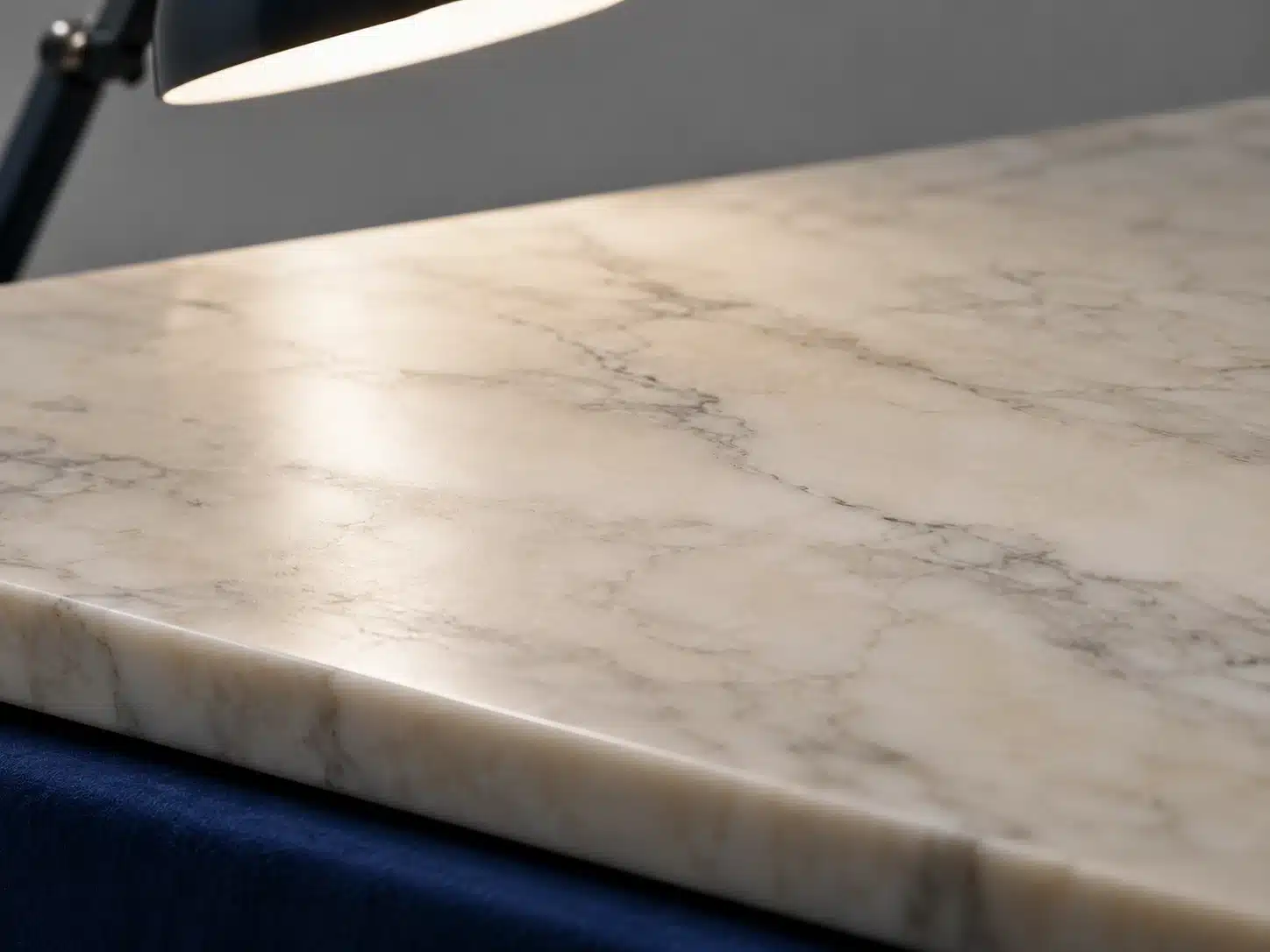
Conceptual dry-surface observation, not an actual cleaning result or a standardized gloss measurement.
7. Separate Cleaning Effectiveness from Surface Repair
A trial can show that a proposed method removes a surface film while a deeper mark remains. That does not automatically justify stronger cleaning or repeated application.
Identify the remaining condition. Etching, scratches and a changed finish are different questions from removable surface dirt. Deep staining also requires a different assessment from a greasy film on top of the stone.
If an area appears lighter after cleaning, compare the starting record and the nearby reference. Removal of a film, residual moisture, an earlier treatment and an actual finish change need different follow-up questions. Appearance alone does not identify which occurred.
For a stone protection and maintenance enquiry, describe the desired outcome: remove surface soil, investigate a stain, preserve an existing finish or plan a separate treatment. Keep those tasks distinct in the recommendation.
A small visual trial also does not establish disinfectant activity, food-contact suitability, long-term sealer retention or every performance requirement of a commercial floor. Request the evidence relevant to those needs separately.
8. Expand Only Within the Trial’s Defined Scope
If the result is acceptable, record the approved surface, soil, cleaner and complete method. State who reviewed it and what conditions or locations remain outside that decision.
Move to a manageable area that the team can complete through solution removal, rinsing and inspection. Keep the equipment, preparation and timing consistent with the accepted trial. Allow for the actual layout and adjoining finishes.
Check the first expanded section before continuing across the whole installation. A different patch of stone, old repair, coating or accumulation of grime may need another assessment rather than more of the same method.
Where the work includes horizontal and vertical surfaces, review access, runoff and solution removal for each. A convenient flat offcut may establish a useful material observation while leaving the practical method for a wall or edge unresolved.
Keep treated areas identified while the required drying and access conditions are completed. For maintenance work, record how the cleaned area will return to normal use under the actual instructions.
If the product or method changes for a repeat order, review the relevant trial information again. A different concentration, contact period or cleaning tool is a changed procedure, even if the bottle carries the same product name.
9. Give the Supplier a Useful Trial Brief
For distributors and partners, retain the starting condition, product identity, prepared solution, tools, application record and dry observations with the customer’s material information.
Use photographs to locate the area and document the visible condition. Preserve the original files and identify when they were taken. Avoid using edited before-and-after images as the only basis for a compatibility decision.
If a dry patch stays dull after cleaning, check residue, etching and finish damage before changing the treatment.
## 04 PU foam format, symptoms, yield and protection
To discuss a cleaning method with KEDA, send the marble identification, finish, previous treatment, soil history, representative photographs and proposed area. Include the trial method and the specific observation that needs review.
A useful conclusion is scoped: “The identified method produced an acceptable dry result on this surface and soil.” That gives a repeat order a clearer basis than an unlimited claim that a cleaner is safe for every marble.
Frequently Asked Questions
1. Can I test any cleaner as long as the area is small?
Confirm the product permits the material and finish before testing. A small area limits exposure; it does not override an exclusion or resolve missing instructions.
2. Can I approve the result while the marble is wet?
Complete the specified removal, rinsing and drying stages first. Compare the dry finish with its documented starting condition before deciding on wider use.
3. Does a cleaner remove acid etching from marble?
Etching is a surface-damage question, separate from ordinary cleaning. Identify the condition and obtain an appropriate restoration assessment rather than repeatedly treating it as dirt.
4. Should I use a stronger dilution if the first trial is unsatisfactory?
Review the actual product instructions and the reason for the result. Any permitted change creates a revised method to assess; stronger concentration is not an automatic next step.
5. Must I reseal the marble after every cleaner trial?
Review the existing treatment and the accepted cleaning result. Apply a sealer only through a separately confirmed need, compatible product and preparation procedure.