

Marble over underfloor heating requires a coordinated floor system: the stone, backing, receiving surface, adhesive, joints and heating controls all affect the installation. A high adhesive temperature rating alone does not establish that the proposed combination suits repeated heating and cooling.
Start with the actual floor build-up and identify the material at each bonding interface. Then establish substrate readiness, placement conditions and the heating sequence with the responsible suppliers and installers.
This guide helps contractors and buyers organize those decisions. It separates heating-system checks, readiness for stone installation and the later release of the completed floor for heating.
Identify the Heating Assembly Before Selecting Adhesive
Electric and Hydronic Describe the Heat Source
Electric systems use heating elements; hydronic systems circulate water through pipes. Neither description identifies the surface to which the marble will be bonded.
The stone-setting material may contact a prepared screed, an approved leveling layer, a membrane or another designated surface. Low-profile and dry-panel systems can have different receiving layers from conventional screeded construction.
Obtain the actual system detail. Record the structural substrate, insulation, heating layer, load-distributing layer, membranes, setting material and stone as applicable. Use that detail to coordinate preparation and finished height.
The thin-set and thick-bed guide explains why a bonding layer and a floor build-up material have different roles.
Define the Material at Each Interface
A product suitable beneath one membrane is not automatically the product specified above it. Identify primers, bed materials, membrane adhesives and stone-setting materials separately.
Keep product names, versions and permitted uses together. A quotation for “flexible heated-floor adhesive” is incomplete if it does not identify the stone, receiving layer and application limits.
For the broader distinction between fabrication, repair and floor setting, see the marble adhesive selection guide.
Request Information That Answers the Actual Application
| Information to obtain | What it should identify | Why it matters |
|---|---|---|
| Stone description | Batch, dimensions, finish, backs and retained treatments | Defines the material being bonded and reviewed for appearance |
| Heating-system detail | Product, build-up, receiving layer and controls | Defines interfaces and installation sequence |
| Adhesive scope | Natural stone, heated-floor use and compatible substrate | Connects the product to the actual application |
| Application limits | Installed depth, mixing, working conditions and placement method | Makes the proposed method reproducible |
| Temperature requirements | Relevant location, operating limit and control method | Prevents unlike temperature figures being compared |
| Readiness and start-up instructions | Preparation, curing, grout and heating-release conditions | Establishes when each stage may proceed |
Ask for the written application guidance behind a recommendation. If a supplier changes a component, review the affected interface and sequence instead of carrying the earlier decision forward automatically.
Useful supporting evidence describes the tested substrates, adhesive layer, conditioning and acceptance criteria. A resin name or an unexplained strength number does not describe the proposed heated assembly.
Review the Marble and Its Backing
Inspect stone from the supplied batch. Record thickness variation, back profile and any mesh, resin or other retained treatment. Those surfaces remain relevant even when the heating system itself permits natural stone.
Investigate moisture-related darkening, distortion or staining with the stone and setting-material suppliers. Adhesive color is part of the appearance review, but white material alone does not resolve every compatibility issue.
Build a sample with the actual stone and intended background, adhesive and grout. Keep an uninstalled reference and record the materials and conditions. Where heated conditioning or performance testing is needed, agree on a defined procedure; an informal warm-up is not a durability test.
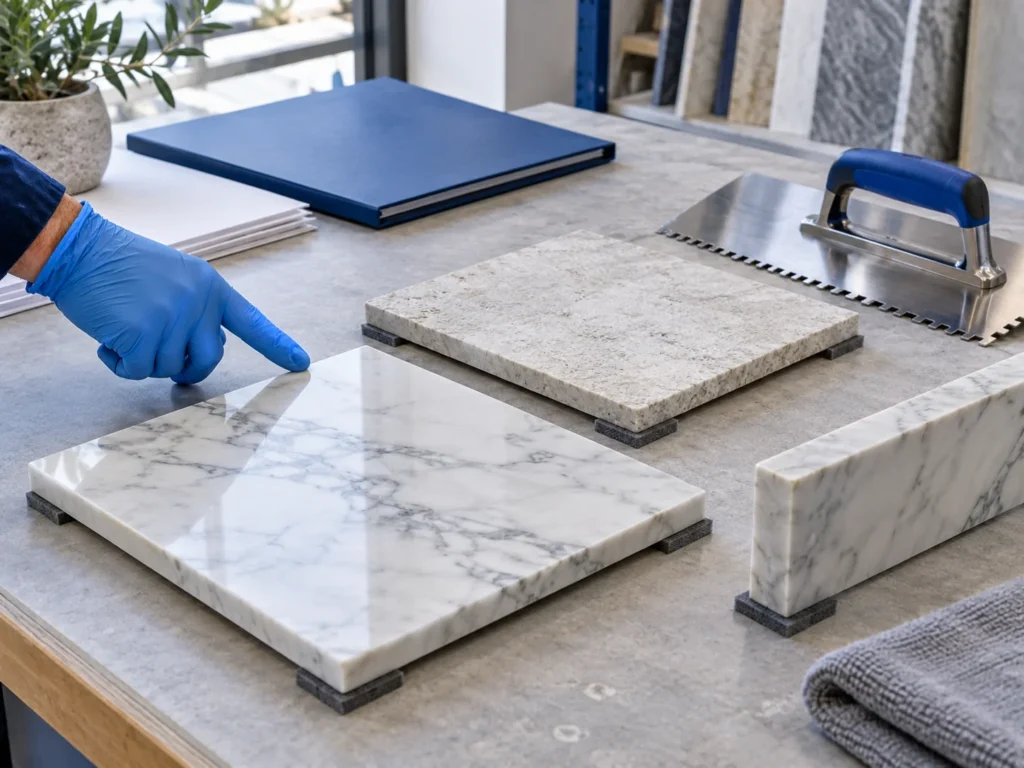
The marble staining and visible glue-line guide explains the appearance issues to observe separately.
Check the Substrate Beyond Its Age
Identify the Screed or Receiving Layer
Record whether the floor contains a cement-based screed, calcium-sulfate screed, proprietary leveling material, board or another system. Use its specified preparation and readiness process.
Check soundness, surface condition, flatness, cracks and contamination. Complete required treatment of the receiving surface before the next layer. Heating does not remove the need for a suitable bonding surface or adequate structural support.
Map the movement provisions and transitions before laying stone. Heating zones, doorways and changes in construction need coordinated details, rather than decisions made after the floor has been covered.
Keep Commissioning and Moisture Acceptance Separate
For a screeded system, obtain the required pre-covering heating record where applicable. Record the procedure used, dates, relevant temperatures, interruptions and any issues identified.
Completing a functional heating procedure does not independently establish that the screed has reached the moisture condition required for the covering. Determine readiness using the specified test method and limits for the receiving layer and installation materials.
Identify test locations through the system records and agreed method before any intrusive sampling. Retain the method, location, units, result, conditions and date. A dry-looking surface or elapsed calendar time is not a substitute for the required assessment.
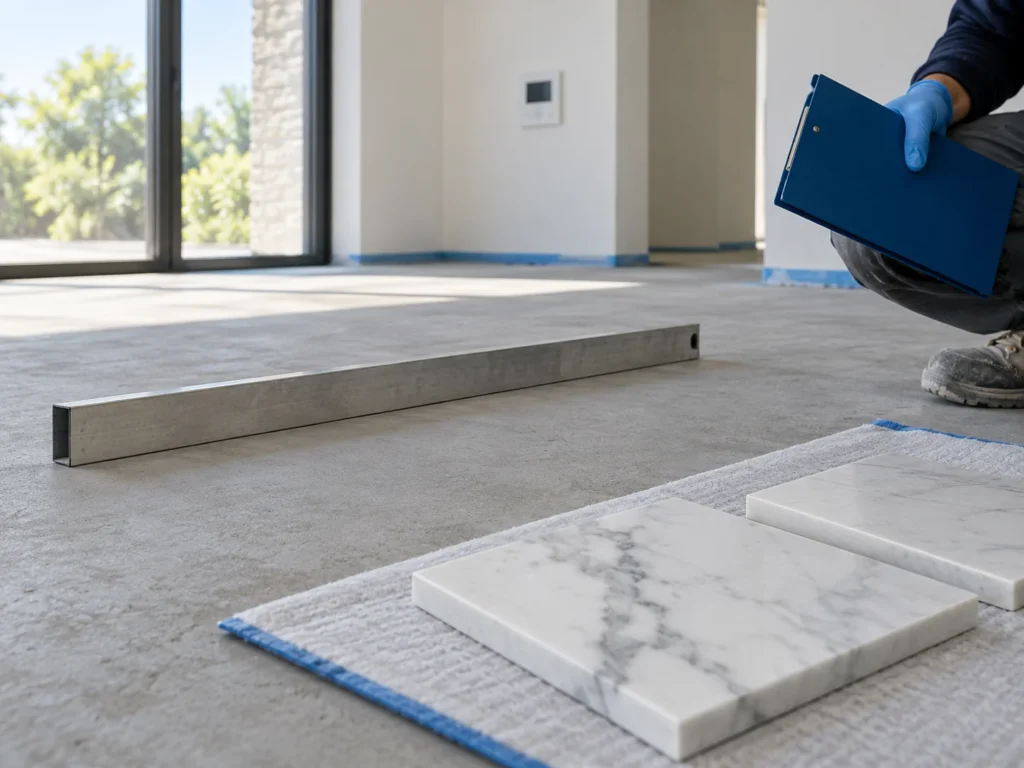
Separate the Heating and Installation Stages
The sequence depends on the chosen assembly. A pre-covering screed procedure and the first heating of a newly tiled electric system are different operations.
| Stage | Work to coordinate | Record to retain |
|---|---|---|
| Heating installation | Required electrical or hydraulic checks and system identification | Installer’s system records and layout |
| Receiving-layer preparation | Specified curing, pre-covering heating where required, surface preparation and moisture assessment | Preparation and readiness record |
| Marble placement | Suitable substrate and room conditions, approved materials and working process | Material batches, conditions and placement observations |
| Setting and grouting | Conditions and waiting requirements for each material | Dates, protection and subsequent-work permissions |
| Release for heating | Earliest permitted start, control settings and any specified ramp or hold stages | Agreed start-up instruction and operating log |
The heating installer should perform and document the system-specific checks. A permitted brief functional check, if expressly provided by that system’s instructions, is not permission for routine heating during floor-material curing.
Before stone placement, bring the receiving surface and materials into the installation conditions required by the selected products. Coordinate shutdown or reduction through the written procedure. One generic “switch off for two days” rule cannot cover every system and season.
After placement, protect the new materials and maintain their required curing conditions. Do not use the floor heating to accelerate adhesive, grout or screed curing. Any prescribed screed-drying program is a separate operation with its own timing and controls.
Interpret Temperature Figures Correctly
Distinguish Air, Water, Sensor and Surface Readings
A room-temperature setpoint, hydronic supply-water temperature, embedded floor-sensor reading and finished-surface temperature describe different locations or control functions.
For each limit, record what is being measured, where the measurement applies and how the system controls it. Confirm the controller’s selected mode and floor-type configuration through the heating installer and current manual.
An adhesive’s service-temperature range also answers a different question from its application-temperature range. The floor must meet installation conditions during placement and curing, even when the cured material has a wider stated service range.
Review the Complete Assembly’s Limits
Coordinate the operating instructions for the stone, adhesive, grout, receiving layer and heating system. Resolve conflicting limits before commissioning or handover.
Do not add an arbitrary temperature margin to an adhesive data sheet and treat it as system approval. Likewise, a controller’s maximum setting is not an instruction to operate the marble floor at that setting.
A high continuous-service rating does not by itself establish performance under repeated temperature changes in the actual joint. Relevant verification should describe the materials, interface and conditions involved.
Maintain Bedding Contact and the Joint Design
Use the selected material’s mixing, tool and placement process. Trial it with the actual stone backs and receiving surface, then inspect representative lifted pieces at the appropriate stage.
Review effective transfer, contact distribution and edge support. Keep installed thickness within the material’s limits. Reducing the layer to pursue faster heat transfer is not a sufficient placement criterion, and extra thickness does not compensate for inadequate preparation.
Record consumption separately from contact. The coverage and consumption guide explains how those measurements support different decisions.
Preserve the project’s movement and perimeter provisions through the relevant work. A product described as flexible or deformable does not remove the need for those details. The rigid adhesives and flexible sealants guide explains the material roles.
Release the Completed Floor With a Written Start-Up Plan
Collect the setting and grouting dates, material requirements and heating-system instructions before assigning the release date. Treat permission for light access, grouting and heating as separate decisions.
Where the specified procedure includes gradual changes, record the starting condition, increments, hold periods, observations and person responsible. Use the actual instructions rather than importing a schedule from a different screed, heater or adhesive.
The handover record should identify:
- The installed assembly: stone, products, batches and system layout.
- Preparation and placement: readiness results, samples, contact observations and changes.
- Heating release: date, conditions, controller mode, limits and agreed sequence.
- Operation and care: maintenance, relevant restrictions on coverings or furniture, and contacts for investigation.

Keep the instructions available to the owner and later trades. Replacement controls, new floor coverings or changes to the room layout should be reviewed against the heating system’s requirements.
Investigate Changes Without Assuming the Adhesive Is the Cause
Record the location, timing, operating conditions and visible condition before proposing a repair. The following observations can have several causes.
| Observation | Information to review first | Investigation focus |
|---|---|---|
| Cracks appear after start-up | Joint layout, substrate history and heating log | Movement, support and the affected layers |
| Dark patches or patterns develop | Stone reference, moisture record and material combination | Moisture, appearance and surface residue |
| Floor response seems uneven | Controls, sensor mode, system layout and room conditions | Heating-system assessment before a bonding conclusion |
| Stone becomes loose | Backing, preparation, contact records and failure location | Actual interface and installation conditions |
| Required records are missing | Product identification, dates and installer information | Recover evidence before assigning cause or responsibility |
A controller display or thermal image does not measure adhesive bond strength. If performance testing is required, define its purpose, sampling and interpretation with the relevant specialists. The stone adhesive testing guide explains the evidence needed.
For the general placement sequence, use the marble tile installation guide alongside the heated-system instructions.
Send KEDA a Defined Application Brief
Provide stone dimensions and back photographs, receiving-layer details, heating-system identification, expected operating conditions and the proposed installation sequence. Include the project area and quantity basis.
KEDA’s current C99, C110 and C210 descriptions do not establish a heated natural-marble floor recommendation. Polyester fabrication adhesive or designated slab-interface paste should not be substituted from a generic temperature claim.
Explore the KEDA product range and contact KEDA with the application details to discuss the relevant material category.
Frequently Asked Questions
1. Is any flexible tile adhesive suitable for heated marble floors?
Check the actual product’s natural-stone, heated-floor and substrate scope. The word “flexible” does not identify every permitted stone, retained backing or installation assembly.
2. Does a high service-temperature rating prove underfloor-heating compatibility?
It is one piece of product information. Review the actual interface, application limits and repeated heating conditions, together with the stone and complete system requirements.
3. Does pre-covering heating replace a screed moisture test?
No. A functional heating record and readiness for covering answer different questions. Use the receiving-layer and installation-material requirements to establish the appropriate moisture assessment.
4. When can I switch the heating on after tiling?
Use the selected system’s heating-release instructions and the new materials’ curing requirements. Coordinate grouting dates and any specified start-up sequence; a general waiting period is not reliable for every assembly.
5. Can I use the thermostat’s room setting as the floor-temperature limit?
Identify the controller’s sensing mode and the location of each limit. Room air, water supply, embedded sensor and finished-surface temperatures are different measurements and should not be treated as interchangeable.