A Focused Approach to Rust-Stained Stone
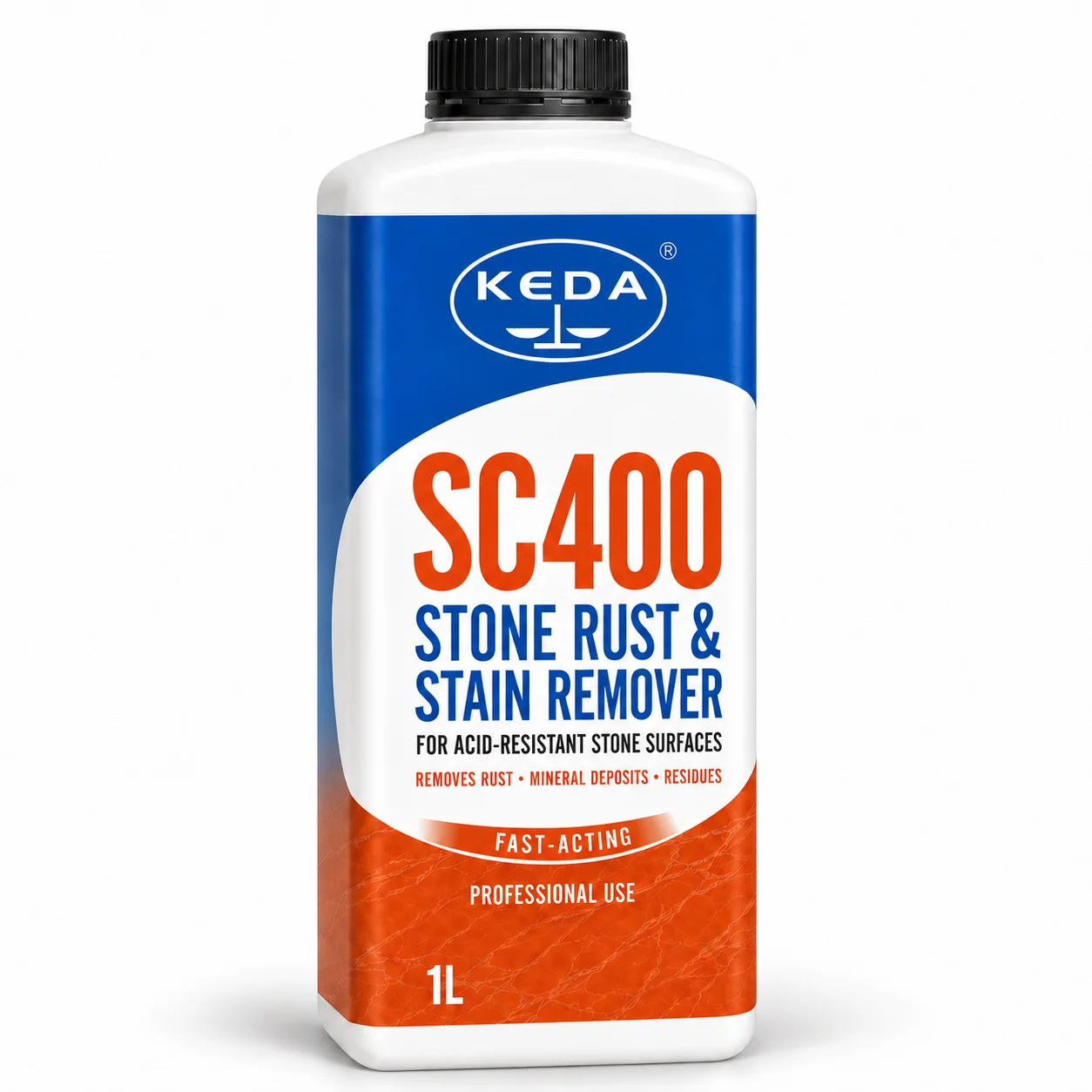
KEDA SC400 is a specialist stone-care product intended for rust stain treatment on compatible acid-resistant surfaces. It is positioned for stone maintenance teams, fabricators and project buyers dealing with identified rust-related discoloration.
Rust treatment starts with understanding the problem. Record the stone type, finish, existing treatments and likely source of staining before selecting a cleaning method. A brown mark alone is not enough to identify rust.
Distributor enquiries & qualifying bulk orders
| Application focus | Rust treatment on acid-resistant stone |
|---|---|
| Selection details | Acid resistance · stain source · adjacent materials |
| Order requirements | Confirm supplied grade, colour, packaging and quantity |
Request the current product instructions and confirmed supply specifications for your application.
These are application enquiries, not blanket material approvals. The actual product must be suitable for the complete surface system, including grout, resin treatments, sealers and adjacent finishes.
SC400 is presented here for acid-resistant stone only. Do not use on marble, limestone, travertine or other acid-sensitive materials. Do not assume that a honed or unpolished finish makes an acid-sensitive stone suitable.
Trade names such as granite are not sufficient approval on their own. Confirm the specific stone, finish and any resin or coating. Engineered stone, terrazzo, tile, grout and metal components require separate assessment and are not automatically included.
Rust deposited at the surface and discoloration associated with minerals inside the stone are different problems. Deep or recurring stains need specialist assessment; complete removal is not guaranteed.
Investigate the source of iron contamination and moisture. Cleaning an existing mark does not repair a corroding fitting, stop contaminated runoff or establish permanent protection against new staining.
SC400 is not positioned here as an oil degreaser, universal descaler, mold treatment, adhesive remover or polishing product. Cleaning cannot reverse etching or replace repair of a damaged finish.
Review the materials and application before choosing the supplied grade.
This overview is for planning only. Obtain the use instructions and SDS for the actual supplied product before application. No dilution ratio, contact time, treatment area or repeat-application schedule is specified here.
Record the stone, finish, previous treatments and stain history. Inspect nearby metal objects, runoff paths and moisture sources. If the stain origin or material is uncertain, obtain specialist advice before applying a chemical treatment.
Prepare the surface to the confirmed instructions, including the required moisture condition. Protect adjacent materials, joints, fittings and planting. Plan how to contain the treatment and collect residues; do not allow uncontrolled runoff.
Test the complete proposed method on a representative sample or inconspicuous area. Assess cleaning effectiveness, color, gloss and any damage after the required rinsing and drying period. A successful trial does not override an explicit material exclusion.
Use the specified concentration, application tool and contact period. Follow instructions on treatment boundaries, keeping the product wet or covering it, where applicable. Do not assume that overnight contact, wrapping, undiluted use or a homemade poultice is permitted.
Complete the prescribed removal and rinsing procedure, collect waste appropriately and allow the surface to dry before assessing the result. If the finish changes or the stain persists, stop and obtain advice rather than increasing the strength or contact time.
Arrange correction of the contamination or moisture source where needed. Any subsequent sealer or color enhancer requires separate compatibility approval and suitable surface preparation; it is not an automatic next step.
No. This product page is scoped to compatible acid-resistant stone, not marble, limestone, travertine or other acid-sensitive materials. A different, specifically approved treatment is needed for those surfaces.
No. Appearance provides a clue, not a confirmed diagnosis. Identify the stain source, material and previous treatment before selecting a cleaner.
No such result is promised. Deep staining or recurring discoloration may involve internal minerals, moisture or continuing contamination. A specialist assessment may be needed, and some staining may remain.
Use only the contact period specified for the actual product and approved application. There is no universal timing for stone rust removers. Longer contact can create additional problems and must not be improvised.
Those uses are not established by this draft. Each deposit and substrate combination needs separate confirmation. The words “stain remover” do not imply suitability for every type of stain or residue.
Not on the basis of this page. It concerns rust staining on approved stone, not treatment of metal components. Protect fittings and confirm their cleaning or corrosion-repair requirements separately.
Do not mix these products or assume they form an approved sequence. SC300 is positioned for cleaning and degreasing, SC400 for targeted rust treatment, SC100 for penetrating protection and SC200 for color enhancement. Any combined project requires confirmed compatibility and preparation instructions.
Send KEDA the stone name, surface finish, photographs, approximate affected area and details of when the staining appeared. Include previous cleaning attempts, nearby metalwork and any moisture or runoff concerns so the application can be reviewed before quotation.
KEDA SC400 Stone Rust & Stain Remover