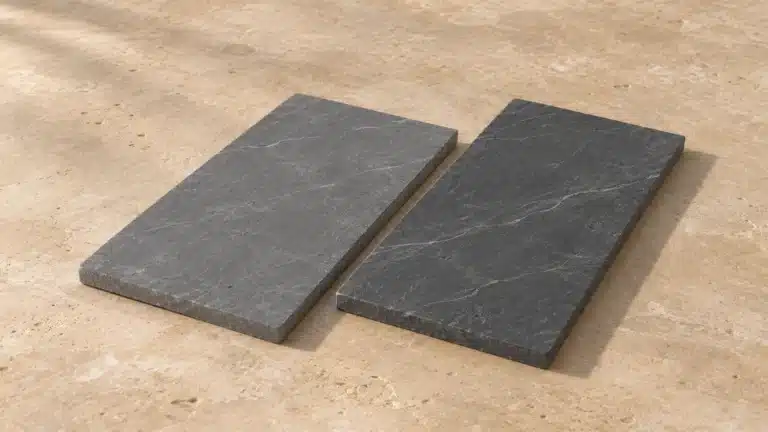

Estimate stone sealer quantity by treating a measured, representative area with the selected product’s complete specified procedure. Divide the product consumed by that area, then multiply by the comparable area still to be treated. Keep additional site allowances and package rounding visible in the purchasing calculation.
The key question is what the coverage figure includes. A rate for one application, a complete treatment and an absorbency demonstration describe different things. Using them interchangeably can leave a contractor short or make a distributor’s quotation difficult to defend.
KEDA’s stone care range separates protective treatments from cleaners, enhancers and finishing products. Select the treatment first, establish its application procedure, and then measure consumption on the actual surface.
1. Define the Coverage Basis Before Calculating
Write down whether a quoted rate means square meters per liter for each application or for the complete prescribed treatment. If the instructions require multiple applications, a complete-treatment trial must include all of them. Do not multiply its resulting quantity by the application count again.
Keep the two common units distinct. A higher figure in m²/L means one liter covers more area. A higher figure in mL/m² means more product is consumed for each square meter. Comparing the numbers without their units reverses the conclusion.
If the trial is weighed, keep the result in mass units until the actual product density is confirmed. One kilogram is not automatically one liter of sealer. A volume-based purchase estimate needs the correct conversion for the supplied grade, with units retained in the calculation.
Also identify the treated faces. A floor’s exposed top surface is a different scope from steps with risers and exposed edges. Measure the faces included in the approved treatment rather than multiplying a room’s plan area by an unexplained factor.
Para Selante penetrante para pedra KEDA SC100, consumption is established through a representative trial and the confirmed instructions. Its product overview supplies no fixed coverage or coat count. Request those application details for the supplied product before planning the trial.
2. Divide the Project Into Comparable Surface Groups
Group areas by stone, finish, condition and previous treatment. A honed limestone lobby, polished granite counter and previously treated staircase should have separate trial records. A small sample from one group cannot establish the quantity for all three.
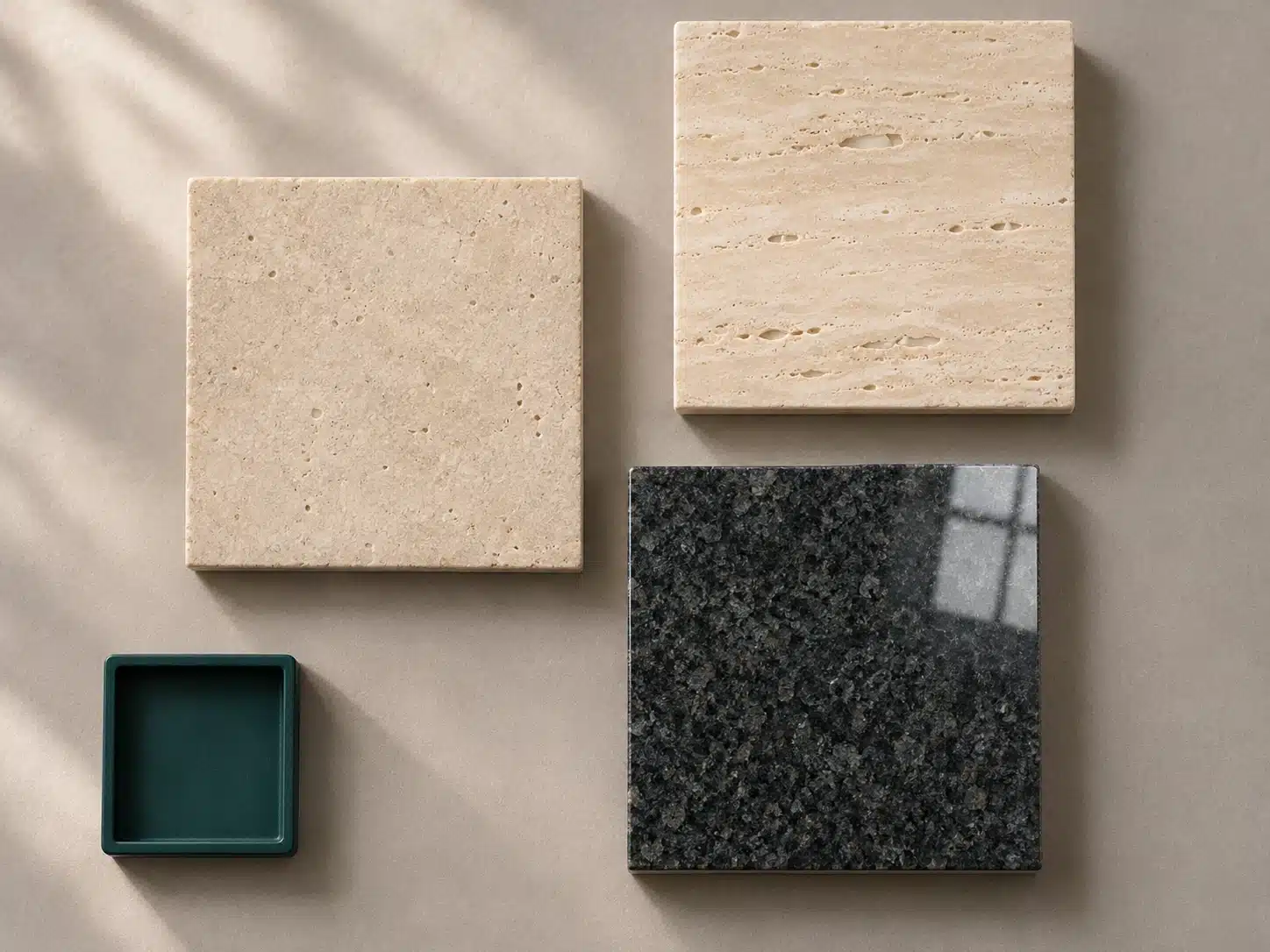
Illustrative material differences, not an absorption test or a ranking of the samples’ sealer requirements.
Choose a trial location that represents the work, including its preparation and access. A clean spare piece can help evaluate appearance, but a site trial may reveal earlier treatments or residues absent from new material. Record which kind of trial supplied the estimate.
| Grouping detail | Record for the trial | Keep separate when it changes |
|---|---|---|
| Stone and finish | Material identification and surface finish | Different stone, polish, texture or porosity |
| Existing condition | Previous treatment, wear and preparation | New stone versus previously treated areas |
| Treatment scope | Included faces and measured area | Floors, risers, edges and other separate faces |
| Product and method | Supplied grade, instructions and applicator | Different treatment or application procedure |
| Assessment stage | Required cure and agreed result | Appearance review versus protective-effect assessment |
Within a large group, check more than one representative location if the surface visibly varies. Keep unusually absorbent or resistant patches identifiable. An average hides a problem if it combines areas that actually need different preparation or treatment decisions.
State whether joints and adjacent details fall within the treated scope. A tiled trial that includes grout has a different measurement basis from a loose stone sample. Confirm treatment compatibility for those materials and carry the same scope into the area schedule and quotation.
The coverage section of the STONETECH sealer data sheet shows why a sealer estimate can vary with the surface. Use measured consumption from each comparable trial area to estimate your own order quantity.
3. Measure the Trial Without Changing the Method
Measure and record the test area before dispensing. Identify its boundaries on a plan or photographs; use masking only where compatible with the surface and procedure. Make the area large enough for meaningful measurement and representative application, without inventing a universal minimum size.
Prepare it as the main job will be prepared. Where grease or grime needs assessment, KEDA SC300 – Limpador e Desengraxante para Pedras de Alto Desempenho is a separate product discussion. Confirm its suitability and preparation sequence before using the resulting surface for a coverage trial.
Use compatible measuring equipment with graduations fine enough for the expected volume. Record product issued to the trial and any measurable unused remainder separately. Define consumed volume consistently as the issued quantity less that remainder; do not return used material or collected excess to stock.
Consumption here means product used by the documented application process, including normal material retained in applicators or removed with excess. It is not a measurement of the volume absorbed into the stone. Record spills separately so an accident does not become a supposed material requirement.
Follow the complete prescribed application sequence, including any required repeat application and excess removal. Note the operator, tools and conditions. Do not spread the product more thinly, dilute it or omit a required step to reach a target coverage number.
Allow the required assessment period before approving the result. Record uneven appearance, residual film or an unacceptable protective result before using the consumption figure in a quotation. Quantity data from an unsuitable treatment is not a sound purchasing basis.
4. Convert the Trial Into a Clear Quantity Estimate
Use one unit system throughout. For a volume measured in milliliters, calculate consumption in mL/m² first. Convert to liters only when estimating the job quantity or expressing coverage in m²/L.
The following numbers are hypothetical arithmetic, not SC100 specifications, recommended application quantities or measured KEDA results. Assume a suitable trial uses 200 mL for the complete specified treatment of 4 m². Assume a further 120 m² of comparable surface remains to be treated.
| Calculation | Worked example | Meaning |
|---|---|---|
| Consumption | 200 mL ÷ 4 m² = 50 mL/m² | Product consumed for the complete treatment |
| Equivalent coverage | 1,000 ÷ 50 = 20 m²/L | Comparable area treated per liter |
| Remaining work | 120 m² × 50 mL/m² = 6,000 mL | Base product quantity for remaining area |
| Convert to liters | 6,000 mL ÷ 1,000 = 6 L | Base estimate before separate allowances |
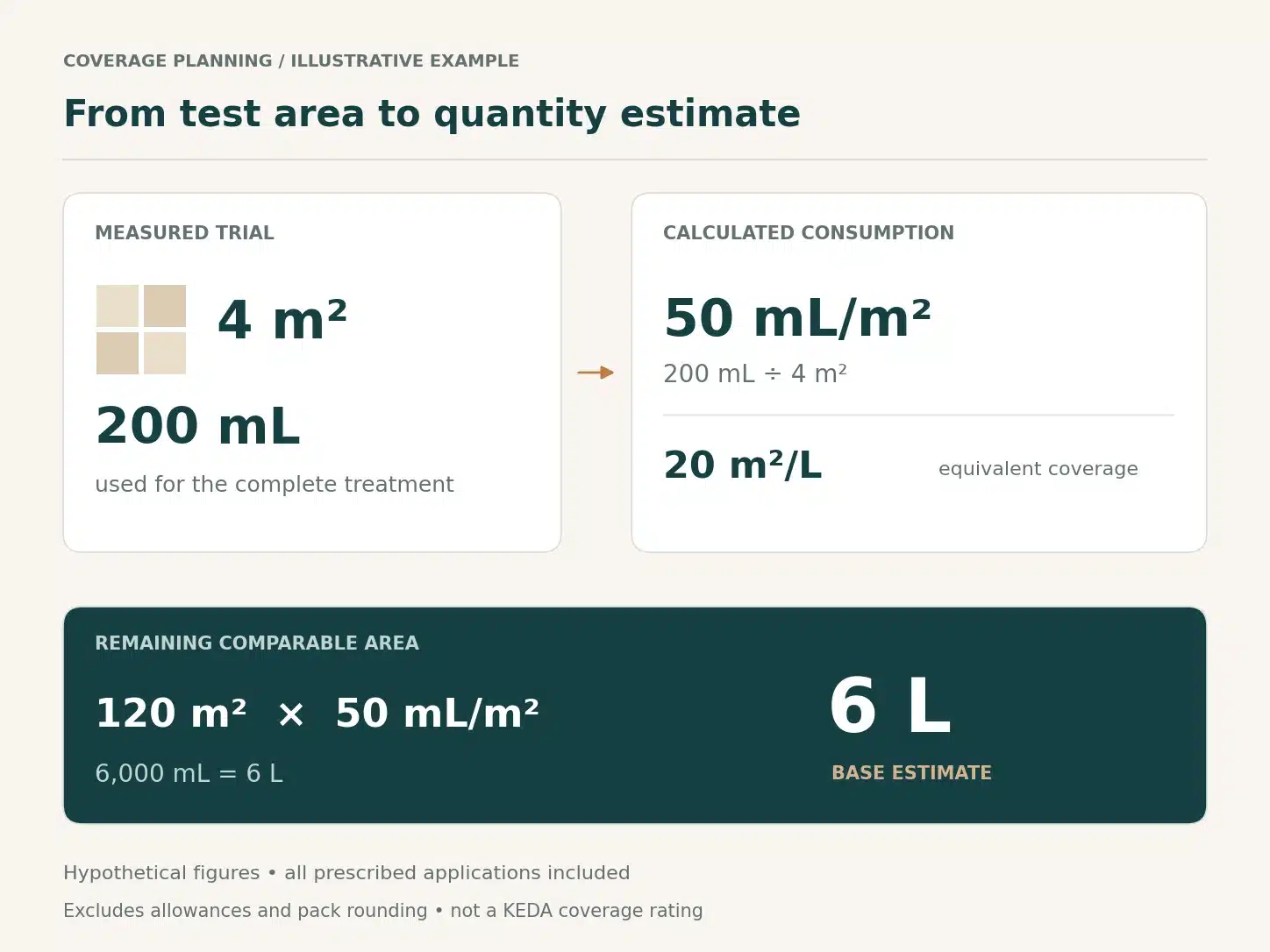
Illustrative arithmetic only. All required applications are already included in the trial; 6 L excludes separate site allowances and package rounding.
For several surface groups, calculate each group separately and add the resulting liters. Do not average coverage figures in m²/L and apply that simple average to unequal areas. Area multiplied by each group’s own consumption gives an auditable total.
Keep already completed work out of the remaining-area calculation. If the approved trial stays as part of the finished job, identify that treated area so it is not purchased for twice. The example’s 120 m² explicitly means work still outstanding.
5. Investigate Unexpected Consumption Before Scaling Up
A trial that uses unexpectedly little product does not automatically demonstrate good economy. It could reflect the actual surface, a previous treatment or an incomplete application. Similarly, high consumption deserves a method check before it becomes the new quoted rate.
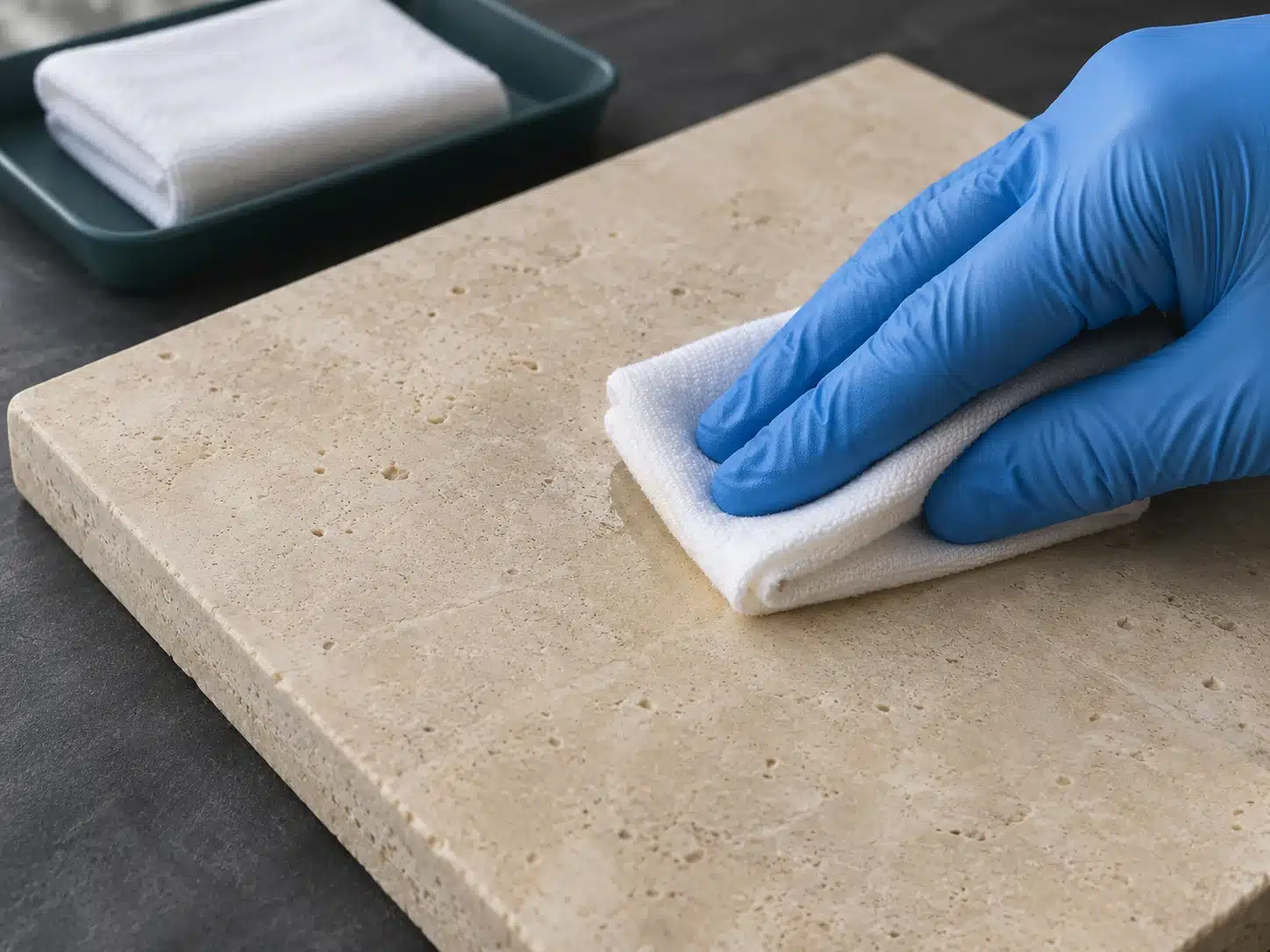
Illustrative excess-removal action. The photograph establishes no permitted dwell time, approved appearance, coverage or KEDA performance result.
| Observação | Review first | Purchasing consequence |
|---|---|---|
| Much lower use than expected | Previous treatment, surface suitability and completed application steps | Resolve the cause before reducing the order |
| Much higher use than expected | Area measurement, surface variation, tool retention and recorded spills | Separate method effects from representative consumption |
| Glossy residue or uneven darkening | Application sequence, excess removal and assessment stage | Hold approval; extra material is not proof of protection |
| Different results across the same area | Finish, preparation and treatment history by location | Split the area into more representative groups |
| Trial and production use diverge | Product identity, tools, operator method and surface condition | Update the remaining-work estimate after review |
Check the measurement itself as well. Reading a coarse vessel for a tiny trial, mixing liters with milliliters or estimating area from an unscaled photograph can create a large apparent difference. Repeat an uncertain measurement before treating the difference as a product issue.
More product is not automatically more protection. Follow the permitted excess-removal procedure rather than leaving surplus material to dry on the surface. KEDA’s stone protection and maintenance solution provides a route to discuss the surface, care objective and representative trial together.
6. Keep Allowances Separate From the Base Quantity
Start with the calculated quantity for accepted, comparable areas. Then list additional justified needs: equipment retention not represented by the trial, separately measured details, handling losses and any agreed contingency. Give each item a reason instead of hiding everything inside a universal percentage.
Avoid counting the same loss twice. If the trial’s consumed quantity already includes normal applicator retention and excess removal, adding a second allowance for those same items exaggerates the estimate. Conversely, a tiny trial with a fresh absorbent pad may overstate repeated startup losses across a continuous larger job.
Review how tools will be used in production. Separate rooms, frequent changeovers or a different approved applicator may create a different consumption pattern. Repeat a representative trial when the proposed method changes materially, rather than correcting the rate with an arbitrary factor.
Round the resulting purchase quantity to confirmed available package sizes. Record ordered volume alongside the calculated requirement so unused package balance remains visible. Confirm the supplied product’s handling and storage requirements before planning how partially used packs will serve later work.
7. Give Distributors a Coverage Statement They Can Explain
Put the basis beside the quantity in the quotation: surface group, measured area, treatment scope, trial consumption and whether the rate includes the complete prescribed treatment. Add the date, product identity and accepted trial reference. Keep allowances and package rounding on separate lines.
A useful statement is: “Estimated from trial SC-01 on the stated stone and finish using the complete confirmed procedure; quantity applies to the listed remaining areas.” Attach the actual calculation and acceptance record. SC-01 is an example record identifier, not a standardized test method.
If comparing products, compare the same scope and an acceptable result. A lower price per liter does not establish a lower material cost per square meter. Use each product’s own complete-treatment consumption and keep package surplus, labor and preparation visible as separate cost items.
Distributors can discuss sample planning and market requirements through KEDA’s distributors and partners page. A customer-facing coverage range should retain its surface and method basis rather than becoming a promise for every stone.
8. Reconcile the Estimate With the First Production Area
Track product issued, unused remainder and completed area during the first representative production section. Compare the resulting consumption with the accepted trial before opening the next large allocation. Investigate a significant difference while the affected area and sequence remain identifiable.
Update the estimate for work still outstanding, preserving the original record and explaining the change. Do not include rejected or unfinished treatment as accepted completed area. Agree the correction and resulting quantity separately when remedial work is needed.
Use the stone treatment selector to confirm the treatment goal before extrapolating the trial-area consumption.
For a KEDA review, send the stone and finish, treatment history, area schedule, product identity, full trial procedure, measured volumes, photographs and assessment stage through KEDA’s contact page. Include the destination and packaging needs when turning the calculation into an order enquiry.
Perguntas frequentes
1. How do I calculate how much stone sealer I need?
Divide the complete-treatment trial consumption by its measured area. Multiply that consumption rate by the comparable area still to be treated, then add separately justified allowances and round to confirmed package sizes.
2. Does a second application mean doubling the order?
Only calculate additional applications when the rate excludes them and the instructions require them. If the trial already includes the complete specified treatment, multiplying by the application count again double-counts the requirement.
3. Can polished and honed stone use the same coverage estimate?
Establish representative results for each surface group. The stone name alone does not establish equivalent consumption across different finishes, conditions or earlier treatments.
4. Can I dilute sealer to cover more area?
Use only the preparation specified for the supplied product. Do not dilute it to stretch a coverage figure. A larger apparent treated area does not establish an acceptable protective result.
5. Is leftover product a reason to apply another layer?
No. Package surplus is a purchasing balance. Apply further treatment only when the confirmed procedure and surface assessment call for it, and remove excess as instructed.