

Water beading is a useful observation, but it is not a complete sealer assessment. A droplet sitting on stone does not, by itself, prove that a sealer was applied, establish resistance to oil staining or show that an installation is waterproof.
Some dense stone also holds water at the surface. To interpret the result, identify the stone and treatment history, observe any absorption or darkening, and review the surface after cleanup and drying.
For distributors and stone-care teams, the practical goal is to connect a visible result with the question being evaluated. A clear sample record is more useful than a photograph of attractive droplets without the material, method or timing behind it.
1. Separate the Observations Before Judging Protection
Describe what you can actually see. A rounded droplet, temporary darkening and a remaining surface mark are different observations. Record them separately so one does not become a claim about another.
| Observação | What it helps you review | What it does not establish alone |
|---|---|---|
| Water remains in a bead | Surface wetting under the observation conditions | That a particular sealer was applied |
| Water spreads or the stone darkens | Liquid behavior and visible change during contact | The exact cause or required treatment |
| A mark remains after cleanup and drying | The final appearance under the review conditions | Whether the mark is absorbed staining, residue or finish damage |
| No visible change in the selected check | The outcome for that specimen and method | Resistance to every other liquid or exposure |
| A glossy or deeper-colored surface | Appearance of the existing finish or treatment | Greater protective performance |
KEDA’s stone-care range includes products for different tasks. Keep protection, cleaning, enhancement and finishing distinct when deciding what the surface needs.
Write the assessment question before starting. “Does this treatment reduce visible water darkening under our agreed sample method?” is more reviewable than “Is this stone fully protected?”
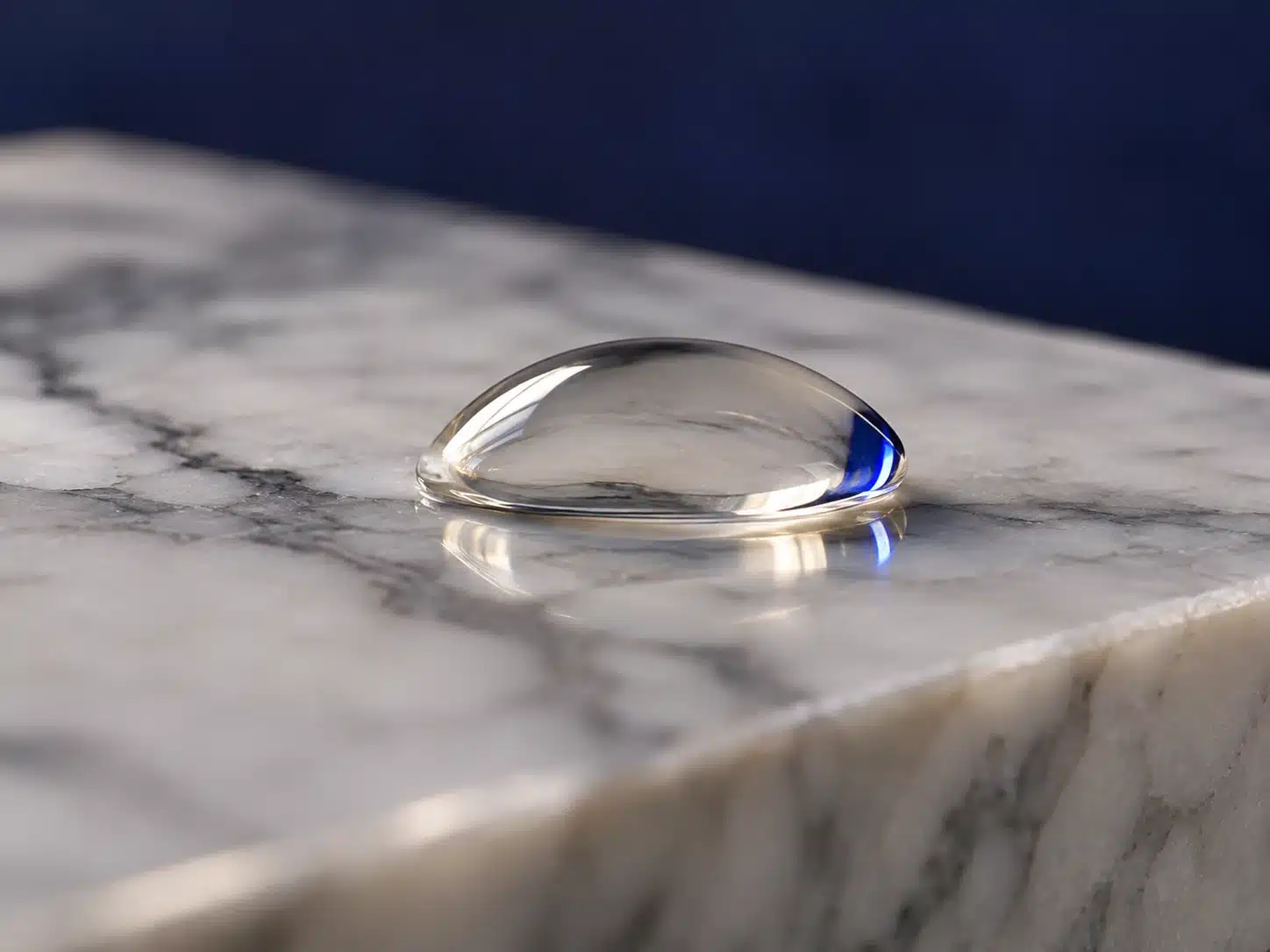
Editorial droplet illustration, not an actual KEDA sealer test or evidence of protective performance.
2. Identify the Stone, Finish and Existing Treatments
Record the stone’s identity and the surface being assessed. Include the finish, factory resin, wax, coating, previous sealer and recent maintenance where known. Mark unknown treatment history as unknown rather than assuming a clean appearance means an untreated surface.
A polished showroom sample and a customer’s previously treated floor may have different histories. Select representative material for the intended work and keep the sample identity with the observations.
LATICRETE’s public stone-sealing check recognizes that water may remain at the surface because the stone is already sealed or because it is very dense. This is why droplet appearance alone cannot identify a specific treatment.
For a proposed new treatment, retain a clearly identified reference with the relevant starting condition. If the stone already has a treatment, describe that reference accurately; it is not an untreated control simply because no additional product was applied during your trial.
Photograph the dry starting appearance and note any existing rings, haze, dark areas or uneven gloss. Those records help distinguish a pre-existing condition from a change observed later.
3. Match the Product with the Result You Want
Define whether the objective is protection, deeper existing color, cleaning or restoration of a damaged finish. Similar presentation in a catalog does not make those tasks equivalent.
Selante penetrante para pedra KEDA SC100 is a discussion point for protective treatment of compatible absorbent stone. Confirm the actual product, surface suitability and properties relevant to the proposed use before setting acceptance criteria.
KEDA SC200 Stone Color Enhancer focuses on enhancing existing stone tones. A deeper appearance should be evaluated as an appearance result; it does not automatically demonstrate the same protection as another treatment.
Ask separately about water-related and oil-related requirements. If the customer needs resistance to a specific staining exposure, provide that requirement when discussing the product and evaluation. A water-only observation cannot answer every stain question.
The Natural Stone Institute describes impregnating treatments as improving stain resistance rather than making stone stain-proof. Set the intended benefit in those practical terms and retain the routine care requirements alongside the product recommendation.
4. Prepare a Representative Surface for the Check
Obtain the proposed evaluation method and the selected product’s preparation instructions. Use an offcut or an approved inconspicuous area where the observation and cleanup can be performed without compromising finished work.
Establish the required starting condition. Record how the surface was cleaned, what product was used, how residues were addressed and whether the specified drying condition was reached.
KEDA SC300 Stone Cleaner & Degreaser is positioned for surface grease and accumulated general soiling on compatible materials. Its presence in the care range does not make it a universal sealer stripper or an automatic preparation step for every stone.
Resolve the existing treatment and finish before selecting a cleaner. Avoid changing the surface with an unapproved solvent, abrasive or chemical simply to make the water behave differently.
For a newly applied treatment, follow its actual application and curing instructions before evaluation. Record the elapsed period and conditions used. A check made before the permitted evaluation stage should remain identified as such, rather than being compared directly with a fully prepared sample.
5. Make Comparisons Under an Agreed Method
Use the same relevant stone, finish and observation conditions when comparing a trial with its reference. Follow each treatment’s own application instructions; comparable evaluation does not require applying different products through one arbitrary procedure.
| Comparison field | What to keep in the record |
|---|---|
| Specimen identity | Stone source, finish, treatment history and location |
| Proposed treatment | Actual product, supplied grade and application record |
| Preparation and cure | Cleaning, drying, treatment steps and evaluation stage |
| Liquid observation | Liquid identity, agreed application and contact conditions |
| Cleanup and final review | Removal method, drying condition, lighting and observations |
| Decision | Question evaluated, acceptance basis and unresolved items |
Agree the liquid amount, contact period and observation points with the relevant product supplier or evaluation provider. Use the selected method consistently and record departures. A timing example published for another brand is not automatically a KEDA test instruction.
Choose sample coverage around the actual selection question. Where the stone varies, or different finishes are involved, keep those observations separately identified. Avoid selecting only the most attractive result from a trial series.
Define any acceptance requirement before the results are known. A workshop comparison can inform a selection, while a formal performance claim may require a more specific test and report.
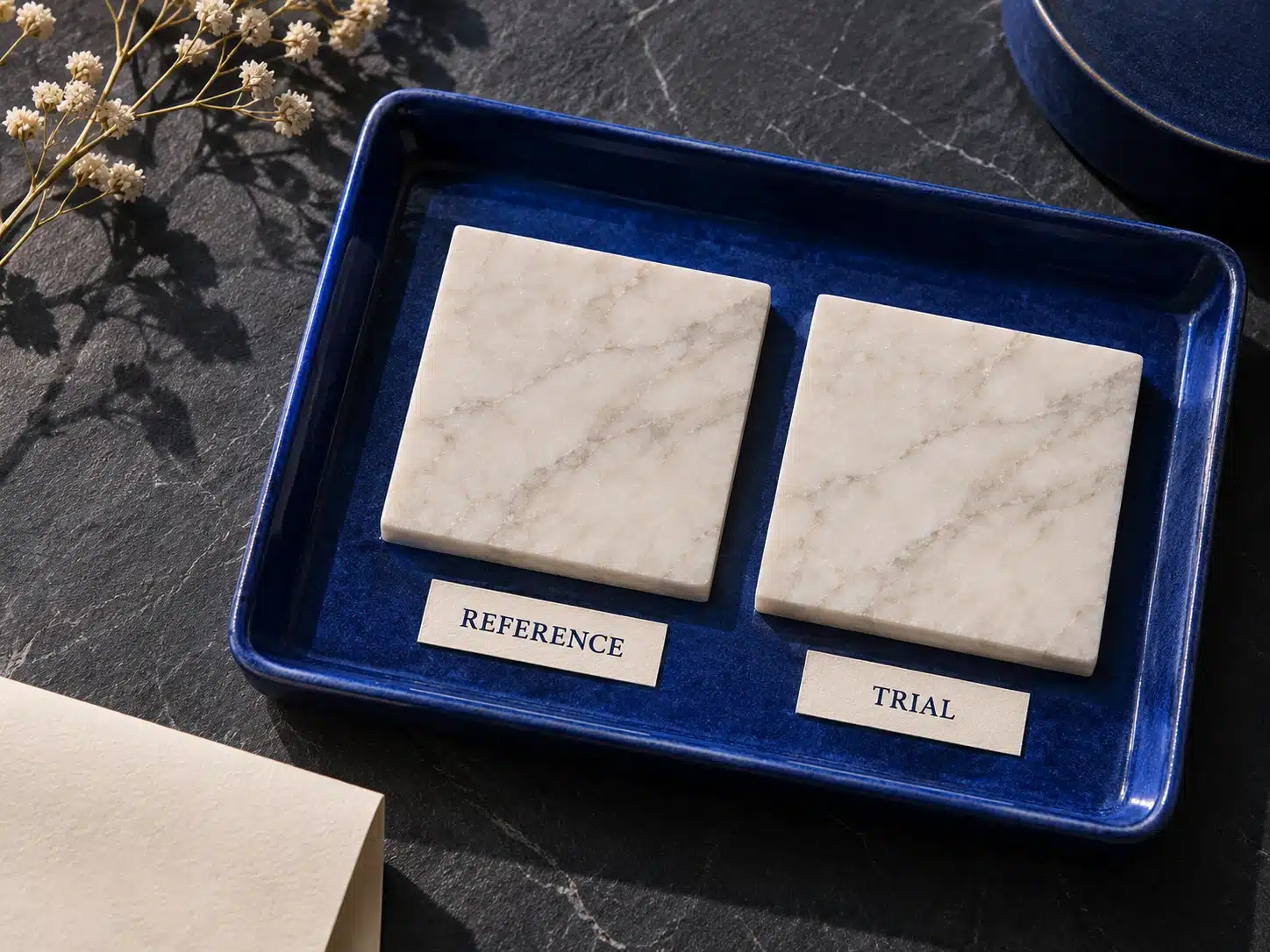
Staged comparison-planning scene. The matching dry specimens show no treatment result and do not prescribe a sample count.
6. Observe More Than the Shape of the Drop
Follow the observation sequence in the agreed method. Record liquid behavior and the stone’s appearance during contact, then inspect again after the specified cleanup and drying stages.
| Observation stage | Useful record | Interpretation boundary |
|---|---|---|
| Before contact | Identified dry appearance and existing marks | Establishes the starting condition |
| During the agreed contact period | Beading, spreading and any visible darkening | Describes the selected liquid’s behavior at that stage |
| At liquid removal | Actual contact period and cleanup performed | Connects the result with the method used |
| After the required drying condition | Remaining mark, color, haze or gloss difference | Supports a final appearance review under those conditions |
| On comparison review | Reference and trial observations together | Answers the defined question within the comparison’s scope |
A smaller visible droplet does not identify where all the liquid went. Keep absorption observations separate from a change in the amount remaining on top, and record environmental or procedural differences that affect the comparison.
Use consistent photographs, including enough surrounding surface to locate the observation. Keep the lighting and viewing direction recognizable so a changed reflection is not mistaken for a changed finish.
Describe the outcome plainly: what was applied, under which conditions and what remained visible. Avoid assigning a numerical repellency value from a freehand photograph.
Retain the original photographs and written record together, including observations that differ from the expected result.
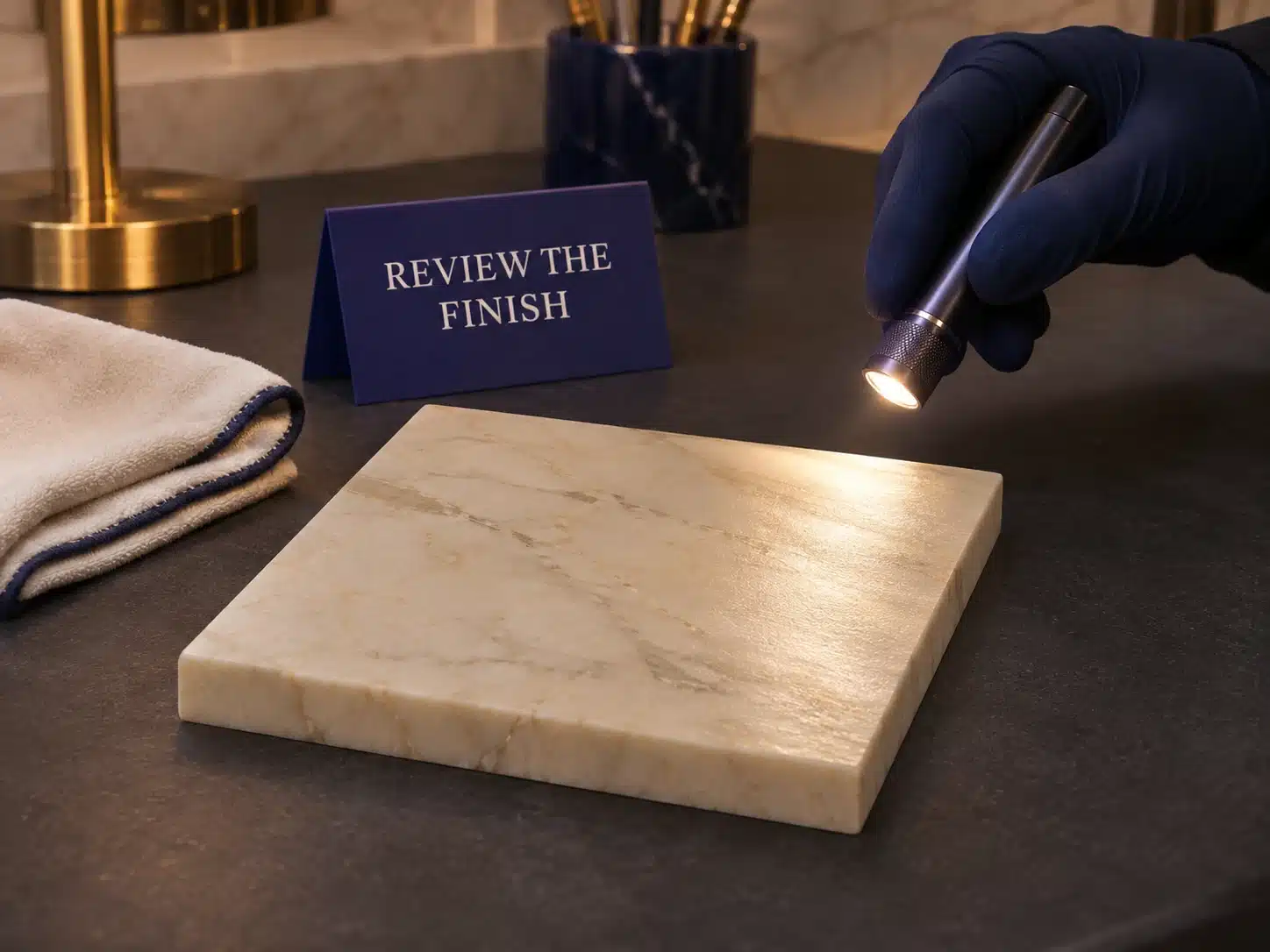
Conceptual finish-review scene, not an actual residue diagnosis, sealer evaluation or restored surface.
LATICRETE's sealed stone water-test guide shows how a water check can help assess the condition of a treated surface. Record any darkening as well as the drop shape, and keep the conclusion to the surface's response to water.
7. Keep Staining, Etching and Waterproofing Separate
Water exposure and oil exposure answer different protection questions. Where oil staining is relevant, request a product recommendation and an appropriate representative evaluation for that requirement. Keep the substance, contact, cleanup and final review conditions attached to the finding.
Acid etching is another issue. Marble and other calcareous stones can suffer acid-related finish damage. A penetrating sealer should not be treated as permission to leave acidic substances on the surface or to use acid as a casual test on finished work.
LATICRETE’s stone-care FAQ distinguishes penetrating-sealer protection from protection against etching. A surface can repel water and still develop an etch mark; the mark and the water observation need separate interpretation.
Surface treatment also differs from construction waterproofing. A penetrating sealer does not replace the specified waterproofing, joint treatment or water-management details of an installation. Moisture coming from behind the stone requires investigation of its source.
When a mark persists, establish whether the concern is staining, residue, moisture or finish damage before selecting another treatment. More sealer is not a general remedy for those different conditions.
8. Review Changes Before Automatically Resealing
If water behavior changes during use, compare the current condition with the original record. Include cleaning history, wear, previous treatments and the locations being compared. Check that the observations were made under relevant, comparable conditions.
A loss of visible beading alone does not specify the maintenance action or the amount of additional product needed. Ask what the actual care instructions require and whether preparation, cleaning or further assessment should come first.
Before reapplication, review the dry finish for haze, tackiness, uneven appearance or other existing concerns. Confirm compatibility with the previous treatment. Adding another layer over an unresolved surface problem can make the subsequent assessment harder.
KEDA’s stone protection and maintenance guidance separates protective treatment, cleaning and finishing discussions. Use that task-based approach to identify the next action rather than treating the entire care range as a fixed sequence.
Retain the assessment and approved maintenance method with the surface record. Future reviews can then compare an identified condition and process instead of relying on a remembered impression of how strongly water once beaded.
9. Give Customers a Result with a Clear Scope
For a product inquiry, provide the stone and finish, previous treatment, proposed care objective and actual observations. Include the product and application history where known, along with the comparison method and photographs.
For example: “Water remained on this identified surface during the agreed observation. We recorded the appearance before contact and after cleanup and drying. We still need to assess the customer’s oil-staining requirement separately.” That statement is more useful than an unrestricted claim of complete protection.
For a distributor demonstration, label the stone and method and explain which question the display addresses. Keep photographs connected to the original record. A promotional image should not replace the underlying evaluation.
If you still need to choose a treatment, use the stone treatment selection guide to separate protection from appearance.
Entre em contato com a KEDA with the material, finish and required result to discuss the relevant product. Confirm the actual supplied grade and supporting information before extending a sample observation into a customer promise.
Perguntas frequentes
1. Does water beading prove a stone has been sealed?
No. Dense stone can also hold water at the surface. Identify the material and treatment history and interpret the observation under the agreed method.
2. Does weaker beading mean the sealer has failed?
It is a reason to review the current surface and care history. Use the actual maintenance instructions and relevant observations before deciding whether to clean, reassess or reapply.
3. Does a successful water check prove oil-stain resistance?
No. Assess the oil-related requirement separately with the relevant product information and evaluation. Keep each result within the exposure and method it addresses.
4. Will a penetrating sealer prevent acid etching on marble?
Do not rely on it for that purpose. Water repellency and acid-related finish damage are different matters; follow stone-care guidance and address etching separately.
5. Should every stone surface be resealed on the same schedule?
Use the actual treatment’s instructions and assess the surface, use and maintenance history. A universal calendar interval or droplet photograph cannot determine the right action for every stone.


